Ponder replays: The end of an outmoded relic?


On August 13, the FA announced its decision to scrap FA Cup replays for the upcoming season, marking another step in the governing body’s ever-evolving solution to drawn games. Whether we’ll see a return to the replay format remains uncertain, but with so many advocates calling for this change down the years, this may well be the end of the replay as we know it.
The current global climate has indeed taught us a harsh lesson in frugality. Perhaps it makes perfect socio-economic sense to scrap the replay system permanently. ‘In order to assist in easing pressure on the football schedule,’ is the official line from the FA, but we must also consider the costs associated with staging and travelling to replays. Not every club can casually write off a replay as a mere logistical annoyance.
While this change may simply be a temporary suspension of the norm, at least for now, it has effectively ended an era.
Back in the day a match was replayed indefinitely until one, usually bashed and bruised team, eventually emerged victorious. In November 1971 Worcestershire side Alvechurch and Oxford City played out a six-match series – a record for the longest-ever FA Cup tie. In 1991 this record was forever enshrined with the adoption of the single replay system.
The saga that unfolded between these two teams is legendary – playing each other six times in less than three weeks. During the intermittent stoppages in play due to injury and fatigue, opposition players could be heard joking and chatting cordially on a first-name basis, such was their familiarity. Alvechurch finally won the fifth replay 1–0 at Villa Park – 17 days after their initial meeting. In the aftermath, Villa Chairman Doug Ellis poured champagne for all the players in celebration of their entry into the Guinness Book of Records.
Alvechurch and Oxford City needed five replays to settle their FA Cup first round tie in1971#FACup pic.twitter.com/XQZ5Xa9bmc
— Football Memories (@footballmemorys) April 24, 2015
The multiple replay format certainly added fuel to some of the fiercest footballing rivalries. The atmosphere of a replay was made that much more personal by the individual battles that had developed over the series. It conjured epic nights, some truly worthy of Homer. A handful of you may be old enough to remember the thrilling 1980 semi-final, when it took four games to separate Arsenal and Liverpool – with Arsenal’s Brian Talbot eventually scoring the decisive goal in a tight 1-0 win.
The concept of endless rematches of course seems rather archaic, and a logistical impossibility in the current European success-obsessed climate. Premier League managers complaining about fixture congestion has become a common, tiresome affair in the media over the last number of seasons.
Wolves played 59 competitive matches last term – can you imagine the impact an additional four or five replays would have had?
At times the end to the 2020 football season felt like a throwback to the good old days, with a short turnaround between games, and players pushed to their physical limits. In this regard I think most football fans would agree that they would rather see two teams battle it out at peak fitness. They certainly don’t want their favourite players spending Christmas on the treatment table. Quality over quantity is my preference. Another reason to axe replays, I suppose.
The 1991/92 season saw another adaptation to the replay format, with the introduction of the single replay system. Replays were to be played at the original visitor’s home ground, with extra-time, and ultimately penalties deciding the tie in the event of a deadlock.
In those days the penalty shoot-out was still a largely foreign concept, and initially seen by many as an unsatisfactory method of deciding domestic ties. Sports author Dave Thompson speculates that penalties were only introduced to market the game to the American audience. ‘Look ma, no ties,’ is how he put it. The FA were certainly more cautious about adopting penalties than their European and international counterparts, with UEFA adopting the format in 1970 followed by FIFA in 1976.
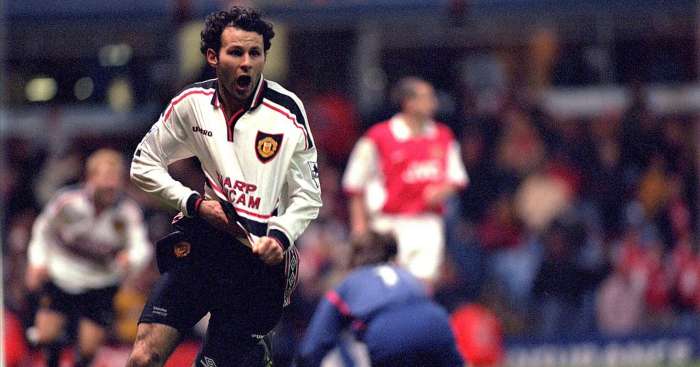
Over the following years the single replay format provided some truly legendary encounters that will remain forever etched in the memory. Who could forget Ryan Giggs’ marauding solo effort in extra-time vs Arsenal in the 1999 semi-final replay. That match would also prove to be the last ever semi-final replay, with a one-off semi-final system adopted for the 1999/2000 season. Final replays had already been ditched after the 1993 final replay meeting of Sheffield Wednesday and Arsenal.
The gradual process of phasing out replays resumed in 2016 when quarter-final replays were axed. Fifth-round replays were next on the chopping block, ceasing to exist from the 2018/19 season onward. In truth the FA’s rather sluggish shift towards a format without replays could only ever end in a total abandonment of the system. Inevitable, yet one wonders why it took so long.
Today, with the FA’s most recent amendment to the format, and no guarantee of a return to the replay system, it appears the FA may have shut the book on another long-standing FA Cup record. Which record is that you might ask? Well, it’s an obscure one it’s true, but one that has stood for nearly 50 years now.
The record for the most FA Cup games played in a season is now unbreakable.
This record belongs to Bideford AFC of Devon, south-west England, who played a staggering 13 FA Cup matches during the 1973/74 season. There are currently only twelve rounds of the FA Cup.
You might expect that a 13-match cup run would take a team to the latter stages of the competition. Quarter-finals at least, right? Wrong. In the era of the endless replay it took Bideford 12 games to reach the first round proper.
Nicknamed ‘The Robins’, Bideford was founded in the late 1890s. They spent most of their history in the North Devon League, though nowadays they play in the Southern League Division South, tier eight of the Football League system.
Having reached the FA Cup first round proper for the first time in the 1964/65 season, Bideford were no strangers to a successful run in the competition. They began their 1973/74 FA Cup campaign with a first qualifying round clash at their home Sports Ground against Cornish outfit Penzance. They dispatched their rivals with ease, the match ending 4-1 to the home side.
The second qualifying round saw Bideford drawn away at coastal side Newquay. A 1-1 stalemate was followed by another exhilarating home tie, a resounding 6-1 success for Bideford. Plain sailing so far, but the third qualifying round would turn out to be an altogether mire of an affair. Game of Thrones fan, think ‘Battle of the Bastards’ with extra mud.
1973 FA Cup 2nd Round Qualifier BIDEFORD v NEWQUAY @NonLgeProgs @NonLeagueCrowd @jslovechild @ChrisGarvey13 @swsportsnews @BidefordAFC @afc_newquay @Sideburnbob1 pic.twitter.com/CStSJoS7h7
— Clive Martin (@exwickclive) January 16, 2020
Their third round opponents were Falmouth Town, a team riding the crest of a wave who would eventually go on to win the South Western League later that season. The first of their five meetings, yes, five, was a fiery encounter, ending in a tense 3-3 draw. A 1-1 result in the first replay at Bideford followed, before consecutive 2-2 draws. Bideford secured their passage to the fourth qualifying round with a 2-1 away win over Falmouth in what was the fourth replay of the fixture.
Starting to feel worn out? Gatekeepers of the first round proper came in the form of fellow Division One South team Trowbridge Town. The teams could not be separated by their first three meetings, with a 2-2 stalemate followed by two 1-1 draws. The third replay saw Bideford eventually emerge triumphant with a 3-2 win.
The reward for Bideford’s endurance – a glamour first round tie at home against Football League Division 3 side Bristol Rovers. Unfortunately, much like Wolves last season, this proved to be a game too far for Bideford. One has to consider those 12 qualifying matches were sandwiched in between the regular league schedule, leaving players utterly spent. Bristol Rovers were a different class on the day, running out easy 2-0 winners.
Unfortunately for Bideford, the FA Cup run also took an inevitable toll on their league form, with the team narrowly missing out on promotion that season by two points. However, in those days it was still two points for a win.. and, well, that’s a debate for another day.
So while Bideford didn’t take home any silverware that season, the club did secure a record. If we can take anything from Bideford’s cup run, and indeed from Wolves‘ prolonged season, it’s that players may be faster, fitter and stronger than they have ever been, but there will always be limits to what the human body can endure. Perhaps it is time to welcome more changes reflecting that.
Eoin Mac Raghnaill – follow him on Twitter (he’s new)