The walkout that worked – Liverpool fans and the £77 ticket protest


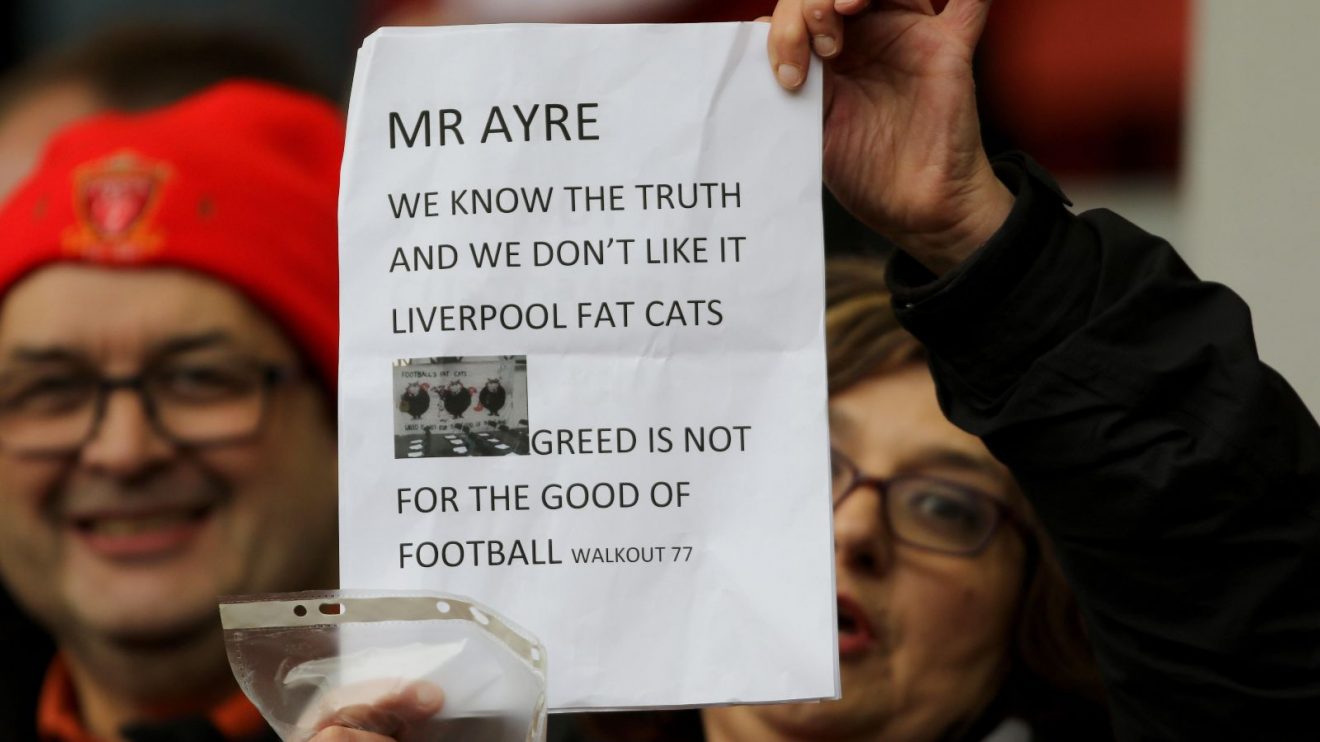
On February 6, 2016, with Liverpool leading Sunderland 2-0 at Anfield, thousands of supporters rose from their seats in unison and filed towards the exits. It wasn’t a fire drill. It wasn’t an early beat-the-traffic departure. It was a protest.
A now-famous 77th-minute walkout, aimed squarely at a proposed £77 top-price ticket in the club’s redeveloped Main Stand. The number was symbolic. The timing was deliberate. The message was impossible to miss.
In the days before the game, Liverpool had announced a new pricing structure for the 2016/17 season. The headline figure was stark: a single match ticket costing up to £77, up from the existing high of around £59. A new Main Stand season ticket would rise to £1,029.
Supporter groups, led by Spirit of Shankly and Spion Kop 1906, reacted immediately. They argued the increases threatened the very identity of Anfield as a working-class ground, at a time when television money was flooding into the Premier League. To them, the move was not just about revenue; it was about whether loyalty was being exploited.
Plans for a walkout were hatched. “Enough is enough” became the rallying cry. Black flags were readied for the Kop to replace the usual sea of red and white. The choice of the 77th minute was a pointed gesture, linking the act to the controversial £77 ticket.
When the day came, the stadium was tense long before kick-off. After 77 minutes, the protest erupted into action. Estimates vary, but around 10,000 of the 44,179 crowd joined in. From the Kop came chants of “You greedy bastards, enough is enough,” followed by a swelling rendition of You’ll Never Walk Alone. Seats emptied in all four stands. Television cameras lingered on the gaps in the terraces. Even Sunderland’s travelling supporters applauded the gesture.
On the pitch, things took a twist. Liverpool, two goals up, conceded twice in the final 10 minutes to draw 2-2. Many noted the symbolism. With fans gone, the team’s focus slipped. Jurgen Klopp, recovering from appendix surgery and absent that day, later commented, “it’s not what we want. We want fans to stay until the game is finished.” But he acknowledged the walkout’s context and supporters’ frustrations.
The club hierarchy, however, had underestimated the backlash. In advance of the protest, chief executive Ian Ayre had tried to defend the ticketing plan. He urged fans to “look at the facts,” noting that 64 per cent of season tickets would freeze or fall in price, that 45 per cent of match tickets would be cheaper and that there would be 1,500 tickets priced at £9 for Category C games. The stadium redevelopment, he pointed out, was being financed by an interest-free loan from owners Fenway Sports Group.
Those arguments held little sway against the optics of thousands leaving Anfield early. Jamie Carragher, retired but still one of the club’s most trusted local voices, sided firmly with supporters.
“£77 is too much to charge for any football match,” he said. Carragher stressed it wasn’t just a Liverpool issue but “for every supporter across the land”.
The impact was immediate. Just four days later, FSG issued an open letter to fans. “Part of the ticketing plan we got wrong,” the statement read. “We humbly apologise for this mistake.” They announced a full U-turn. The £77 ticket would be scrapped; general admission would be frozen at the 2015/16 top price of £59 for the next two seasons; the proposed £1,029 Main Stand season ticket would revert to £869; and match categorisation would be abolished. The allocation of £9 tickets would be increased to a total of 10,000 across the Premier League campaign.
It was a striking reversal and one that sent ripples across English football. Supporter power, so often dismissed as quaint in the age of mega-contracts and billion-pound TV deals, had flexed its muscle and won.
Spirit of Shankly’s Jay McKenna captured the mood. “We are happy with yesterday’s demonstration and we are pleased with the number of supporters who took part,” McKenna said. “Yesterday wasn’t about letting off steam. We really need Liverpool Football Club, the owners and the executives to think to themselves, ‘Is this the right approach?'”
The club’s climbdown suggested the answer was no. More importantly, it showed that even at the very top of the Premier League, where commercialisation is relentless, fans are not powerless. Organised, vocal and unified, they can still dictate terms.
The 77th-minute walkout has since become part of Anfield folklore, a story told not through goals or trophies but through resistance. It is remembered as the day supporters refused to be treated as customers, the day they reminded their club that “supporter” and “consumer” are not synonyms. It is proof that when fans stand – or in this case, walk – together, they can change the game.
And in football, that might just be the most valuable victory of all.
To learn more about Pledgeball and how you can pledge to help your club shoot up the sustainability standings, visit Pledgeball.org.