Burnley are paying the price for despicable takeover that should never have been allowed
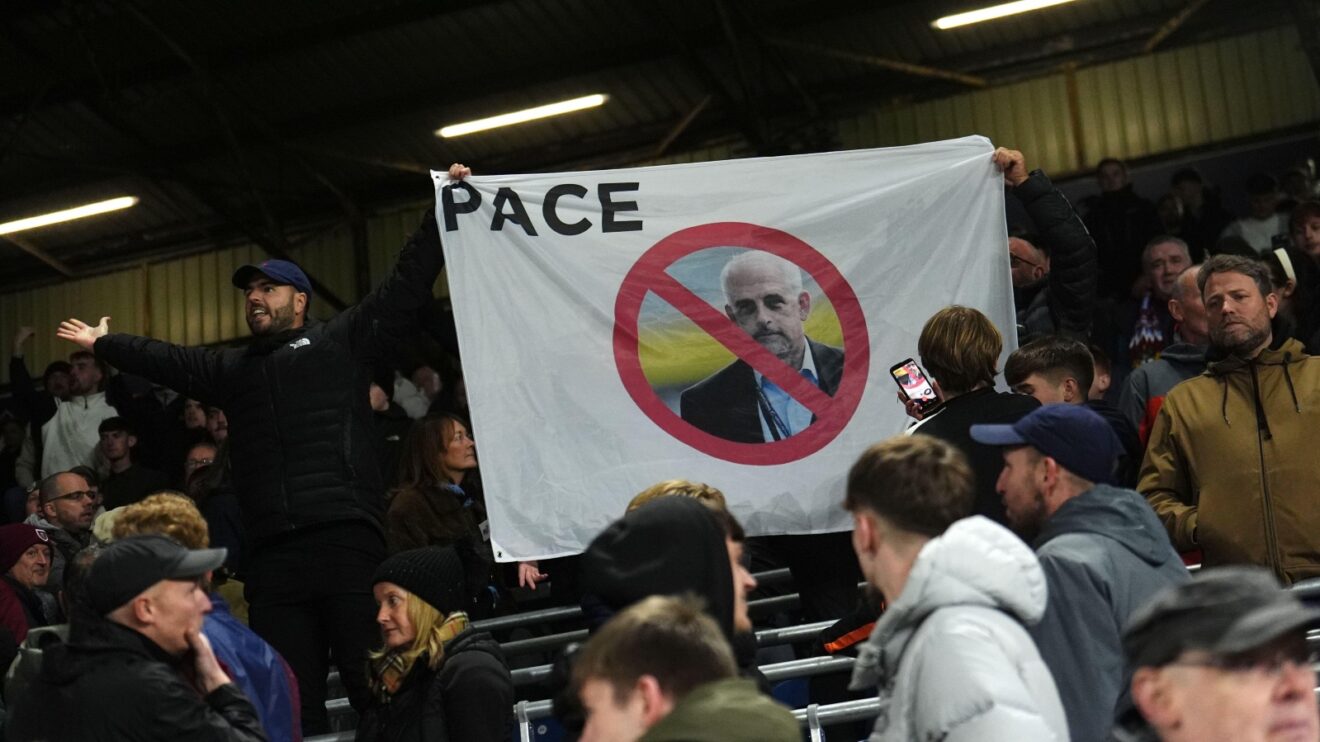
In football, you rarely want to be last.
Last in the table is bad. Last man tends to be bad. Last on the team sheet is particularly bad.
What you certainly don’t want to be, though, is the last club to be bought in a way that is so damaging that it then becomes banned.
You may be aware of leveraged buyouts, especially with the Glazers’ purchase of Manchester United back under the microscope, but everything that happened with the Old Trafford club seems squeaky clean compared to what happened to Burnley in 2020.
In the 138 years of the Clarets existing as a football club before then, they were owned by local businesses and fans. Perhaps that is part of the reason why a town whose population is smaller than Old Trafford has punched above its modest weight.
They are a two-time league winner. They have an FA Cup in their trophy room too. In the modern era, Burnley became a consistent Premier League presence under Sean Dyche, competing against clubs with far deeper pockets.
That success under Dyche and chairman Mike Garlick made Burnley something of an anomaly in English football – they had no debt and in fact had plenty of money in the bank.
Smart spending coupled with multiple years in the Premier League meant that at one stage, Burnley had £42m in the bank. But that all changed in the winter of 2020.
Burnley were the subject of a £170m takeover from the latest US consortium that wanted a slice of English football. The consortium in question was ALK Capital led by former Wall Street trader Alan Pace.
American consortiums are not necessarily evil. As an Ipswich Town fan, I can point to the success of the US pension fund that took over my club in 2021. Am I under the illusion that an Arizona pension fund is doing it for the love of the game? No, but I can recognise that their goal of making money by reaching the Premier League coincides with my goals as a fan. Wrexham fans will tell a similar story.
More than half of the current Premier League teams have American owners – just under half of the Championship do too – but what made Burnley’s acquisition almost unique was the use of a leveraged buyout.
Even explaining what a leveraged buyout makes you realise that it should be illegal. The idea is that a firm or a family can borrow money from a bank and use the club as collateral, essentially loading the debt onto the club.
ALK Capital went further, though. They took out a £65m loan against the club’s assets like Turf Moor but also used £37m of the £42m the club already had in the bank to complete the deal. It is essentially like going to buy a car but being able to use the money of the person selling it to you.
Not only did it drain Burnley of most of their cash reserve, it also kneecapped their future earnings by having to pay off £65m worth of debt at an interest rate of 12%.
In the world that ALK Capital pictured, this was not a problem when you have a seat on the Premier League gravy train. For the 2020/21 campaign, they received an estimated £101.7m in Premier League prize money. But Pace and co. took over Burnley without actually seeming to have a plan of how to run a football club.
MORE ON F365
* Pochettino Premier League tables illustrate why Man Utd made him No.1 choice
* Pochettino at Man Utd next? Five times a manager actually did save a rotten club
* Premier League sack race: Michael Carrick ‘wins’ but who’s next?
The Dyche era was coming to its natural end. They were used to punching above a modest budget but Pace had promised an “exciting” new era for the club. That began with Burnley being the fifth-lowest spender in the Premier League and what money they did spend was spent poorly.
Wout Weghorst came in, going on to score two in 22. Maxwell Cornet and Nathan Collins were the only two other spends over £10m. Aaron Lennon arrived on a free.
With a manager that was struggling to squeeze as much juice out of the team as in previous years and an underwhelming squad, Burnley went down. Dyche got sacked in April, ending a 10-year stint, but probably the only good decision ALK Capital have made came in the summer when they appointed Vincent Kompany.
He exceeded expectations to take Burnley straight back up but his decision to continue playing his brand of football in the Premier League came at great cost to the club – and at a great reward for him as he moved to Bayern Munich.
Burnley fans concerned about the direction their club was heading would not have had their hopes allayed in 2023 when a group of new investors was announced. The first was ex-NFL player JJ Watt and his wife Kealia Watt, herself a former footballer. Later that year, Dude Perfect, a YouTube group known for making trick shots, also came on board.
Amongst the many owners now with a finger in the pie, it seemed none of them actually had ideas for how the club could improve on the pitch.
Becoming a yo-yo team only put more strain on Burnley’s stumbled finances.
Burnley’s relegation from the Premier League down to the Championship would not have fit into ALK Capital’s plan. Parachute payments softened the blow but the hit was almost immediately noticeable. In the final year before the takeover, Burnley made a profit of £26.1m. In the 2022/23 season, they lost £27.9m.
The return to the Premier League had seen debt inflate to £104m, not helped by poor spending. They bought Zeki Amdouni who has scored 10 goals in 55 appearances. Aaron Ramsey has played just 30 games since joining in 2023. Wilson Odobert did well but was sold to Spurs. James Trafford was the only signing you could call a success.
The problem with debt at a football club is it can quickly become the focus. Rather than winning games, the objective is instead to pay the bank.
By the end of the 2024/25 season, in which Burnley again won promotion from the Championship, the net debt was up to £129.4m. A club that was previously the model of how to run operations was falling further and further into the red.
Some relief came, mainly in the form of an £80.1m payment from holding company Velocity Capital which was money used to buy the club initially. A payment of £38.8m from Everton because of their PSR breach also helped.
That payment prevented Burnley from suffering a record loss in their 2025/26 accounts. A win off the pitch was more than could be said for on it.
They went down again, this time with a club-record low tally of 22 points. But the string on the yo-yo has been cut this season as they are down in 22nd and looking very likely to be the latest Premier League club to suffer a double relegation.
The problems started in the summer. Maxime Esteve, Loum Tchaouna, Zian Flemming, Florentino Luís, Jaidon Anthony and Luca Koleosho all left but no replacements came. Only West Ham made more money in the summer but the Hammers had a far better squad to start with and Burnley were not selling a player for £85m.
There were problems in the dugout too. Burnley pursued Craig Bellamy only for the Wales boss to turn it down in the late stages. With a month to go until the new season, Burnley appointed the Genk boss Nicky Hayen.
Perhaps unsurprisingly for a squad captained by a 36-year-old Kyle Walker – no, he hasn’t retired yet – Burnley started the season terribly. A 2-2 draw on the opening day to West Ham suggested some positivity but they conceded seven goals in their next two games in big defeats to West Brom and Norwich.
They conceded in every game in September, earning just three points from six matches, and it was not until the start of October that they recorded their first win of the season – a 4-0 win away at the similarly awful Watford. They have not won since.
Hayen got the sack and Burnley took another risk in hiring Fabio Celestini. The Swiss has pedigree having won the double with FC Basel but surviving the relegation fight in the Championship is another kind of challenge.
He is not helped by the brittle nature of the squad’s mentality. Of the 10 times Burnley have taken the lead, they have won just one game. They have lost five of them. In their most recent game, they were winning 4-1 away at Cardiff as late as the 64th minute and yet still lost.
It has left Burnley five points adrift from safety, just two off the bottom. It’s been over a full year since Burnley last won at home. It’s credit to the fans that 19,000 of them still bother to turn up to Turf Moor.
And while matters on the pitch worsen, so they do off it. At the end of October, Velocity Capital were served a compulsory strike-off notice from Companies House for failing to submit accounts on time. Accounts provided at the end of July say the club is £62.9m in debt.
This season the club are receiving a parachute payment from the Premier League and will do again next year provided they do not return to the top flight but as they were only in the Premier League for one season, they do not get the third year of parachute instalments.
That was an estimated £44.4m in the 2022/23 and will have risen since then, so it is going to be a big gap for Burnley to fill in the near future. Relegation to League One also has a huge hit on your income. For the 2024/25 season, Championship clubs got around £11m, that figure was down to £2m for League One sides.
If to rub salt in the wounds, ALK Capital made Burnley part of multi-club ownership after they purchased Espanyol last year.
ALK Capital’s acquisition of Burnley is one of the most deplorable financial moves in English football history. A club that had money in the bank and was treated as the gold standard for what a well-run EFL club could achieve faces very real questions about its existence.
No wonder then that the Premier League finally voted to outlaw leveraged buyouts in 2023 but that will mean f**k all to Burnley fans now.
READ NEXT: Which Premier League clubs sack the most managers and does it work?