Manchester United under Pochettino will be ‘slow and painful’ – but Palmer can vouch for the results
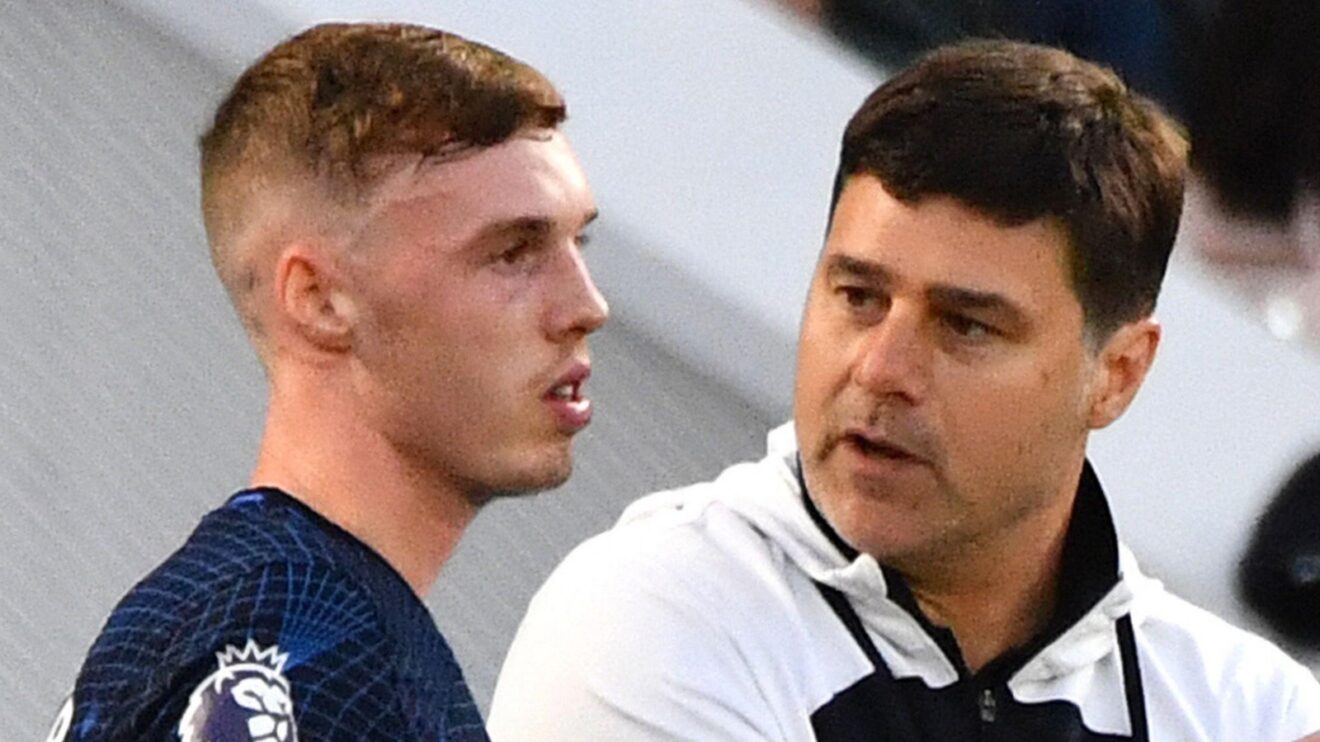
Another season, another managerial change in the middle for Manchester United, off the back of their last manager taking training when the whole world knew he was going to be sacked, like the stand-in bemused dad at Sunday League who takes charge because there’s no-one else available.
The way Manchester United are run, it feels certain that before the season started, the contingency plan if things went bad with Carrick wasn’t to hire Mauricio Pochettino. But then again, it’s plausible they never had a contingency plan in the first place.
So what, then, of the Argentinian, who fabulously rose at Tottenham, putting himself and the club on the map? Well, he’s always been close to being appointed at Manchester United ever since having dinner with Sir Alex Ferguson.
He came close twice until United decided against it. He’s had elite club jobs with PSG and Chelsea, but there was the feeling that he was battling tough circumstances: fitting in Neymar, Mbappe and a moody Messi; and Blueco’s control.
He has publicly stated there was always unfinished business in the Premier League and, for some reason, United is football’s irresistible poisoned chalice. Everyone wants a crack until they actually have a sip.
So what to expect? And what can we learn from his two recent jobs?
Youth
For the sake of this piece, it would be disingenuous to focus on Pochettino’s Tottenham side from yonks ago or his PSG team.
Instead, we will focus on his last Premier League job with Chelsea and what we saw with USA at the World Cup.
First, though, we have to make it a point to mention his ability to develop young players. Be it Luke Shaw, Danny Rose, Harry Kane, Kyle Walker, Cole Palmer or Dele, his track record of developing youth is something United fans and the youth team at Carrington could get behind.
His Chelsea squad in 23/24 was one of the youngest in the league, and he never shies away from entrusting young players if they are ready.
Wide overloads and central midfielders
Pochettino’s time with the USA at the World Cup highlighted that he has been keeping up with tactical trends.
One thing that’s significant to highlight from his Chelsea and USA teams is the emphasis on possession and keeping the ball.
Even if he didn’t have all the players at international level, it was impressive to watch his team build up from the back; it seems highly doubtful he will change this approach at Manchester United, as Chelsea was similar.
The point is to use central midfielders to overload the wing. Sometimes as channel runners and with that, other players can then get involved.
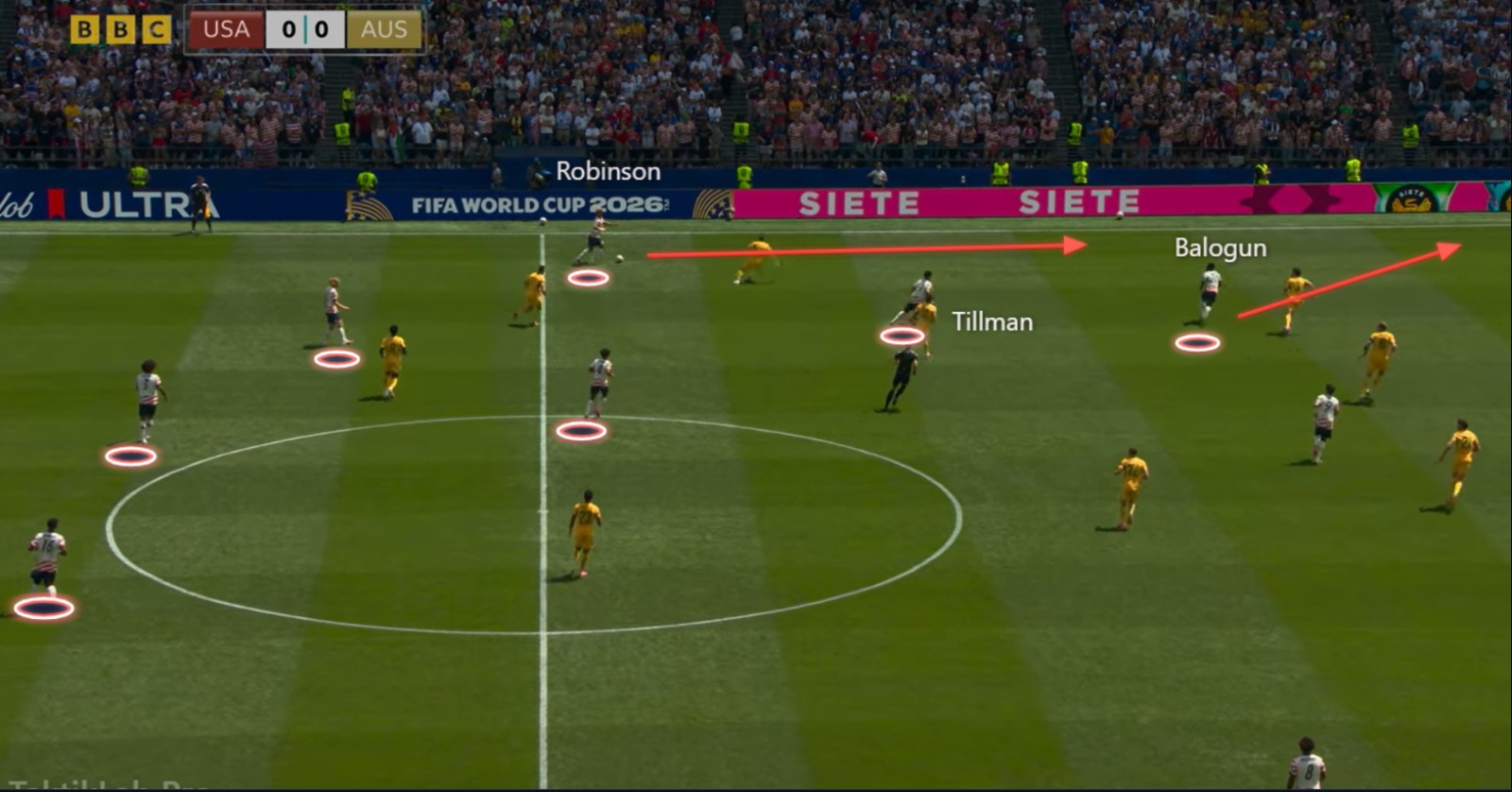
At Chelsea, the common pattern that became clearer was the use of central midfielders on the wing to help create width.
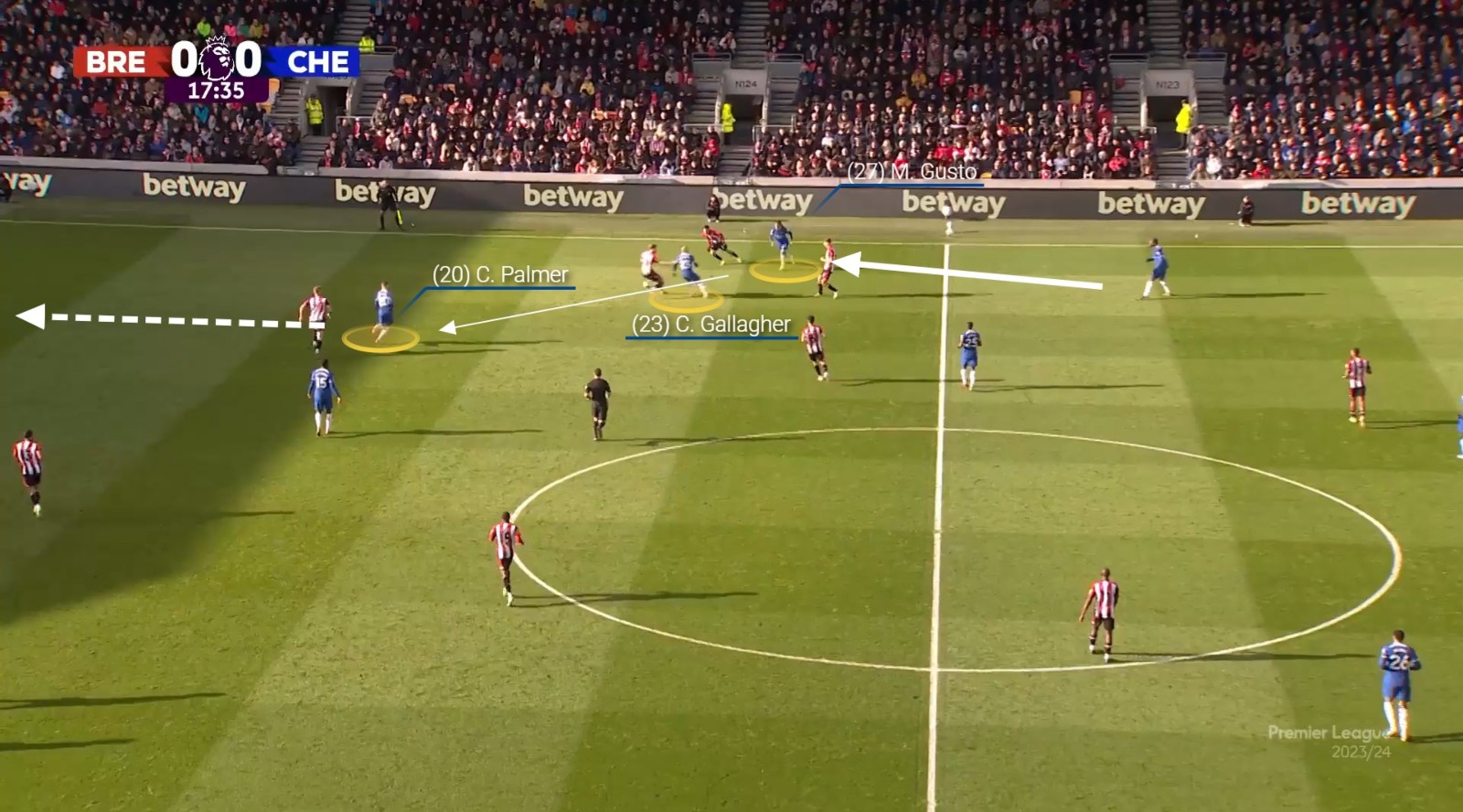
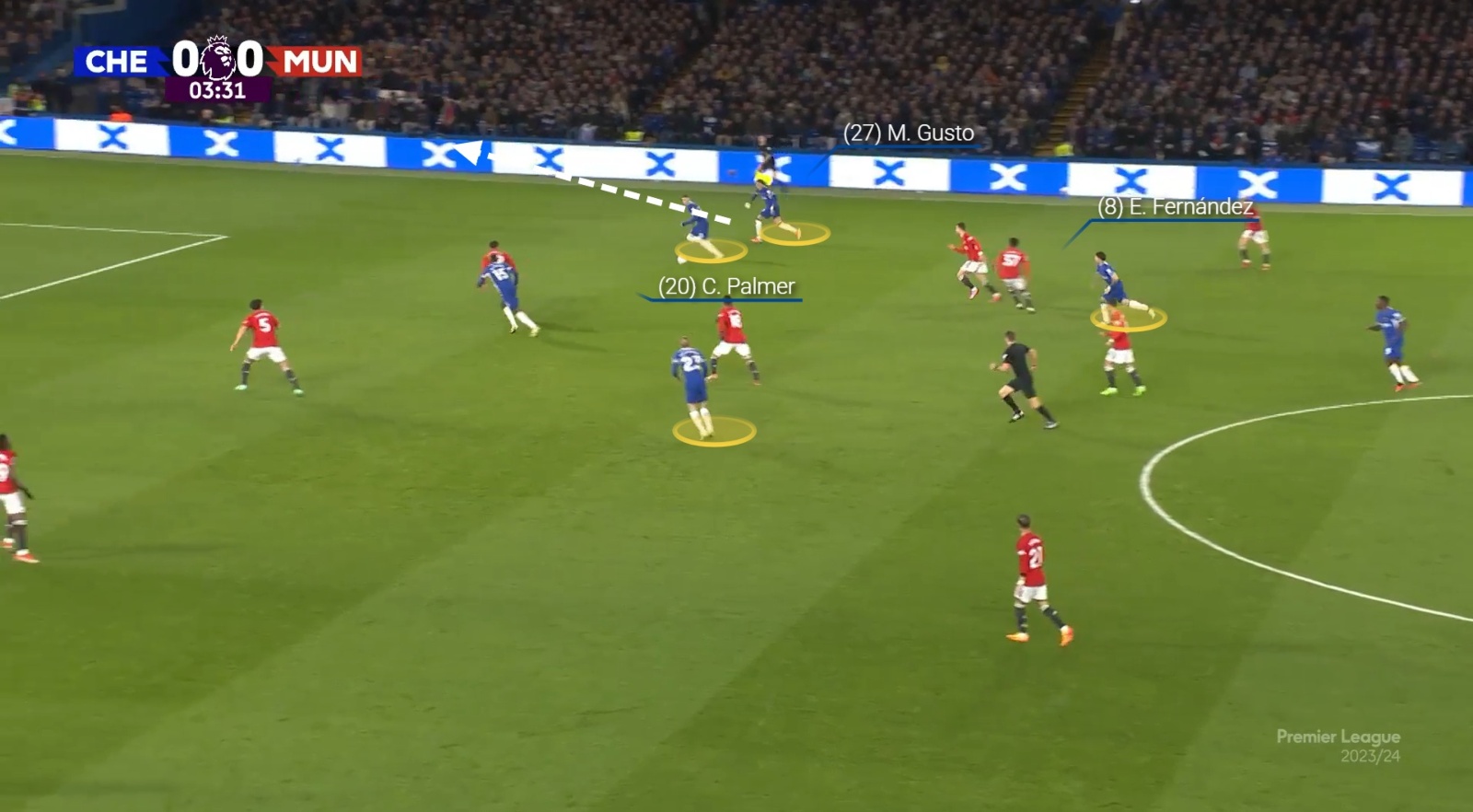
Here, Moises Caicedo is a deep pivot midfielder, with Conor Gallagher pulling a defender out whilst Malo Gusto exchanges with Palmer for a give-and-go.
Use midfielders to draw out defenders, then get the full-backs involved with width.
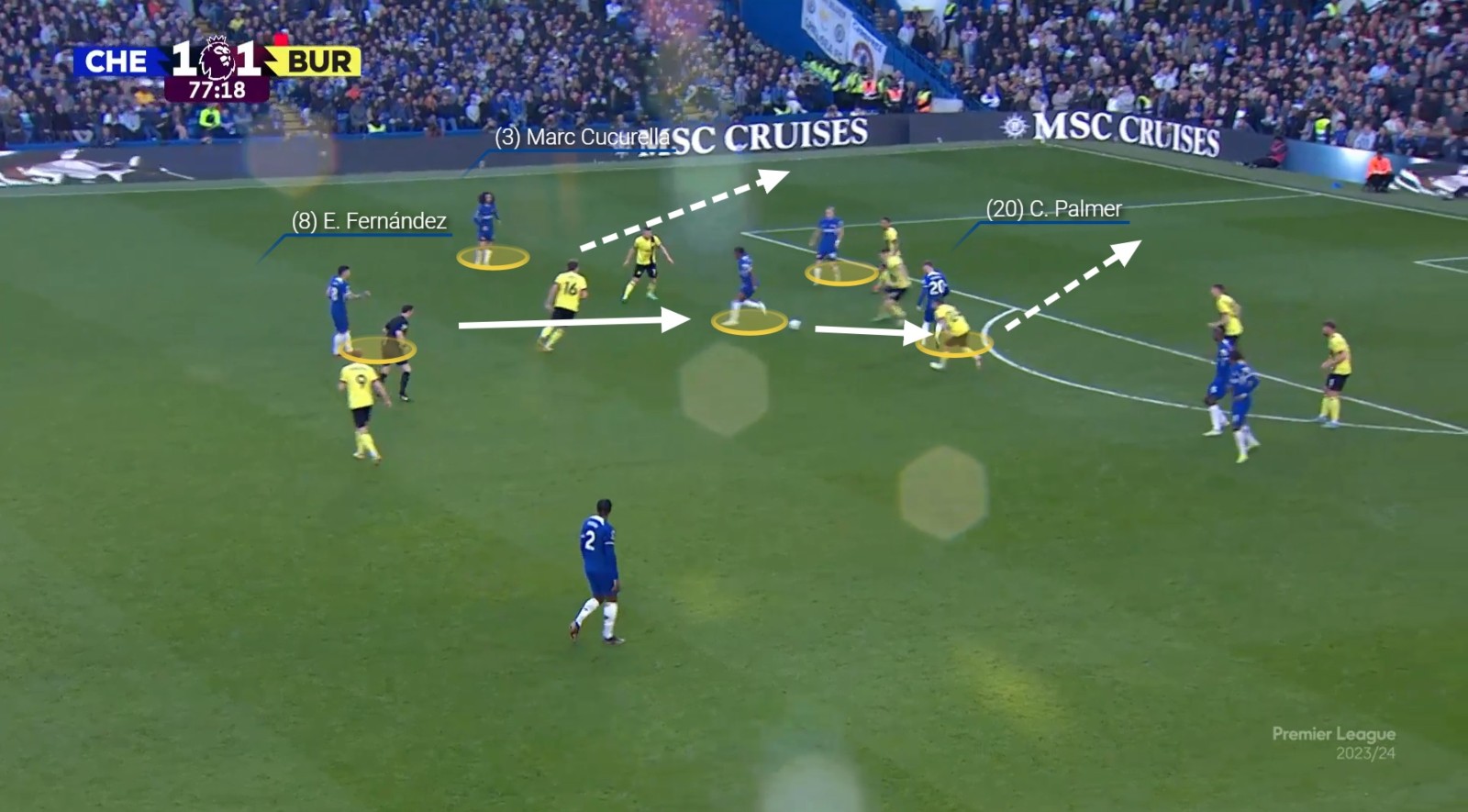
This approach was used because of Palmer’s flexibility. But it also meant that the full-back can overlap or underlap in the half-spaces, with one midfielder deep and the other joining the attacking line or two joining the attacking line to overload.
There was flexibility in these tactics that got the best out of Palmer whilst Pochettino figured out how to best utilise Enzo Fernandez with Caicedo and Gallagher.
It’s striking, in the amount of games watched, how often Chelsea used the tactic of starting moves off with a midfield general, then utilising a run in behind from a number eight or central attacking midfielder to create width for aggressive full-backs.
Things got better when he settled on a pairing of Malo Gusto and Marc Cucurella, but sometimes, to combat the number of goals Chelsea conceded, he switched to a back three and used Ben Chilwell as the highest player on the left.
It was striking to also see the flexibility of this system.
He could use an inverted full-back centrally, drop any of his midfielders deep (Palmer) or high (Gallagher) to find gaps wide and then cross for Nicolas Jackson.
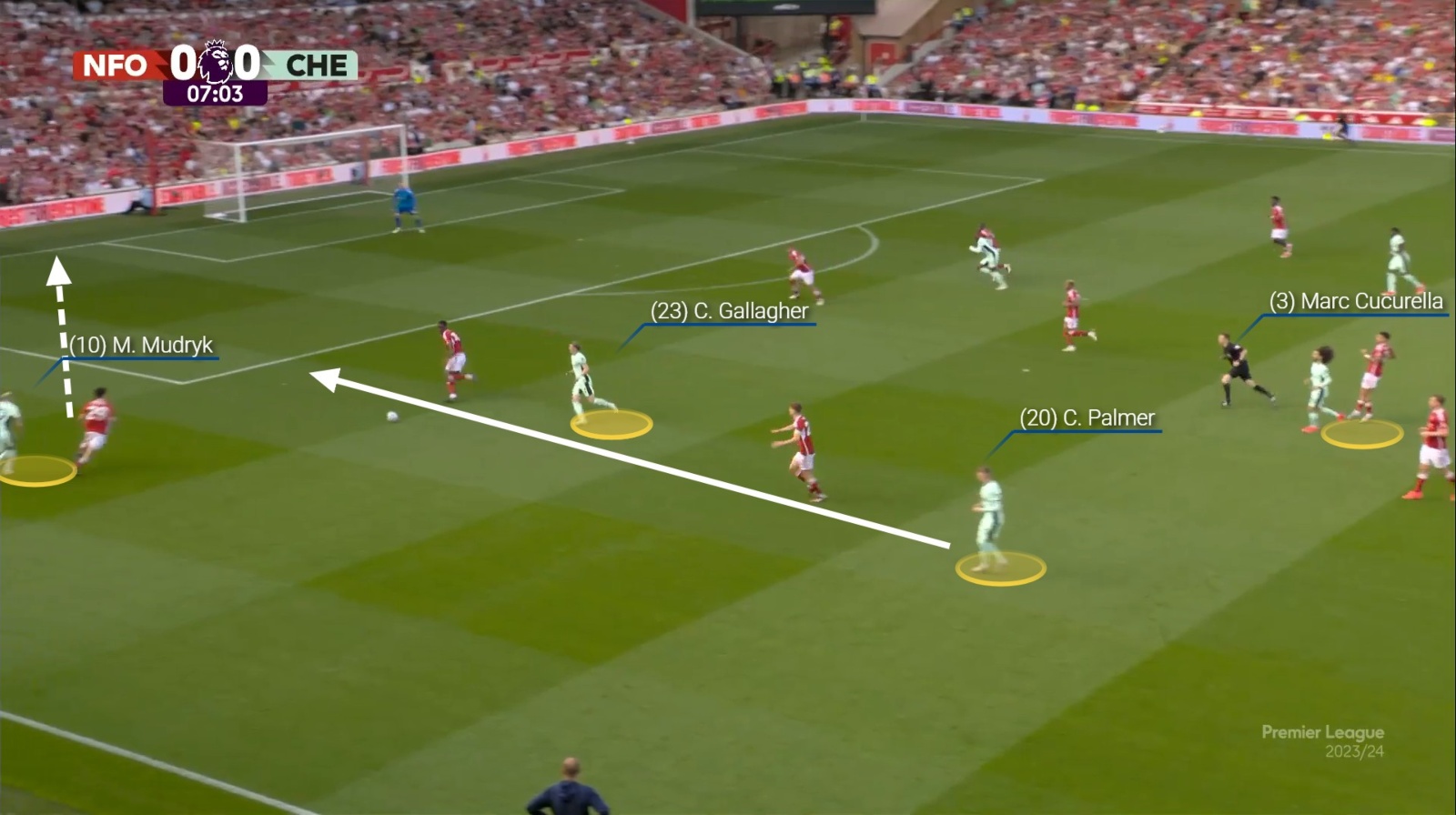
Things were tough at the start of the season as Chelsea were injury-ravaged, adapting to his methods of upping fitness and intensity, but towards the end of the campaign things began to come together as a young squad finished sixth.
It may be a tad alarming, though, from a Man Utd perspective that a team leaking goals is bringing in a manager who last conceded 63 goals in a Premier League campaign. Scoring plenty (Chelsea were the 5th highest scorers in 2023/24) cancelled the leaky defence out.
It was surprising to learn how possession-based Pochettino had become at USA and Chelsea. Perhaps the best way for United to defend would be to keep the ball for long periods, but I’m not sure they have players comfortable under a press to do so.
It definitely looked as though both of his latest teams understood his tactics and were happy to execute them.
Though results in both cases were mixed, you could also make the case that he improved both teams (especially Chelsea); it’s just that it will take time, as the beginning tends to be slow and painful.
But then we’ve heard all this before about learning a manager’s tactics before they begin at Man Utd.
The odds are stacked against him in terms of getting the time and resources he needs to finally turn the most difficult football job in the world into a rewarding one based on history.
But it’s an appointment that United have flirted with before, and Pochettino has always had batted his eyelids at moving back to England.
It was the league that made him who he is, but if he is to be remembered as one of the all-time greats, this strenuous, implausible club needs to give him time to implement his tactical blueprint.
READ NEXT: Five Manchester United stars who Mauricio Pochettino must now build around – not Bruno Fernandes