Ranking all 20 Premier League managers by their playing careers – Pochettino in 7th
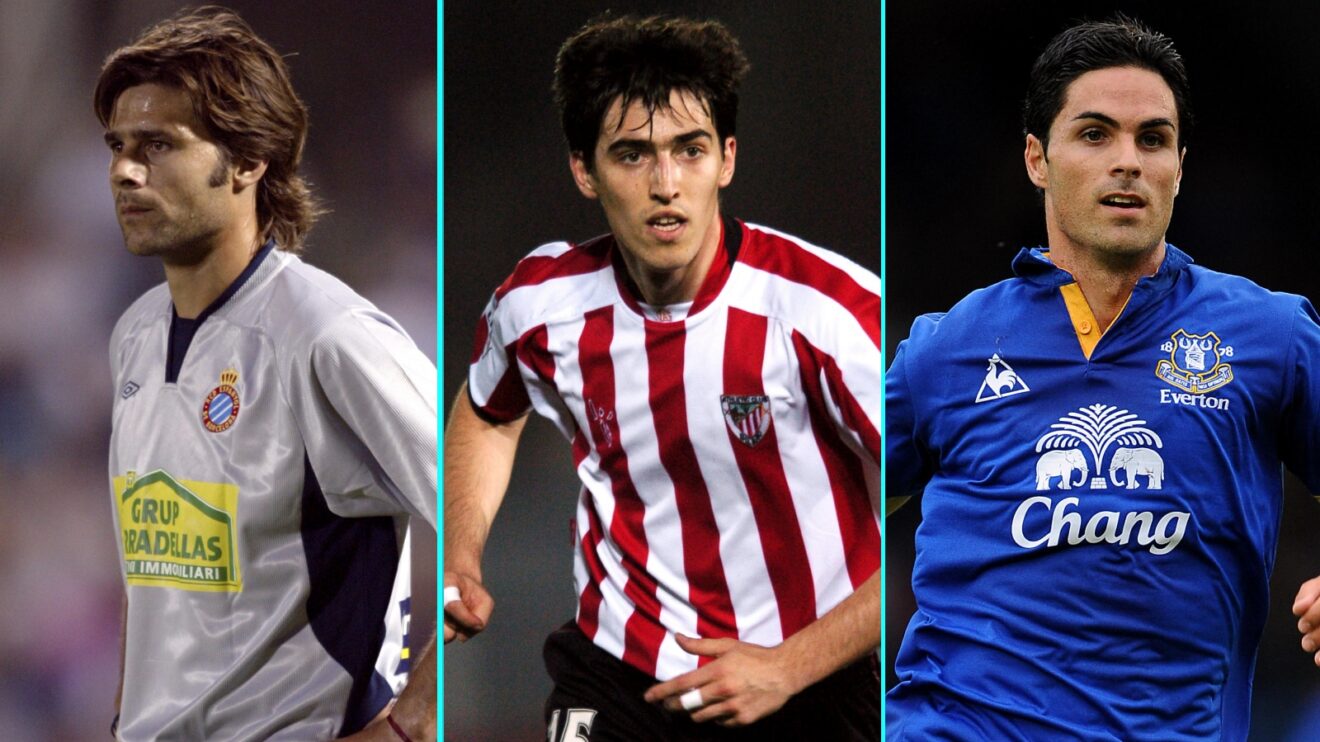
Twenty men are entrusted to coach some of the finest footballers in the world – but what were they like when it was them lacing up the boots?
The Premier League is a current mix of some of the best to ever play the game to some self-confessed absolute plodders and so we’ve gone over each of the 20 bosses currently in charge to determine who exactly is the best player turned manager in the league.
20) Thomas Frank
Frank’s rise to the Premier League is even more impressive when you consider that he did not have much of a playing career to go off.
He never played professional football and instead turned out for a number of amateur clubs in Denmark.
He did, though, have the foresight to realise that a playing career was not for him and so instead studied coaching in Copenhagen before starting youth development training. It is a journey likely to take him to Selhurst Park next.
19) Fabian Hurzeler
Considering he became Brighton manager at 31, you could probably guess what happened in Hurzeler’s playing career.
He was actually born in Houston, Texas as that was where his Swiss father and German mother were working at the time but they moved back to Europe and to Munich when he was just two years old.
He was scouted for the Bayern youth academy and joined them at the age of 10 but only ever made it to the second team. He played primarily as a central midfielder, although could do a job on either wing. Having failed to break into the first team, he was released on a free in the summer of 2013.
From then, he joined Hoffenheim’s second team but spent only a year there, a similar story for stints at 1860 Munich’s second outfit.
Perhaps sensing this was not going to take him to the top, Hurzeler effectively retired as a player at the age of 22.
He then joined FC Pipinsried as a player-coach in the first step of what would eventually take him to the Brighton dugout.
18) Daniel Farke
Farke has admitted he was “the slowest striker in the whole of Western Europe” so that does plenty of our work for us.
The self-confessed plodder spent his whole career in the lower reaches of German football, playing for clubs that would score very highly on a Scrabble board.
He had three separate stints at SV Lippstadt which is where his managerial journey would begin in 2009.
17) Matthias Jaissle
Jaissle had a pretty short professional career, playing for just seven years before moving to the sideline.
The entirety of his career came as Hoffenheim, where he played as a centre-back for the 2. Bundesliga side.
Guided by future Manchester United manager Ralf Rangnick, they were promoted in the 2007/08 season, enabling Jaissle to make 31 appearances in the top flight but he was dropped out of the first team following the first season.
His last appearance came in 2014 and his managerial career began as an assistant at Brondby.
READ MORE: Pairing Jaissle with Newcastle transfer business a high-wire act with no safety net
16) Regis Le Bris
Centre-back Le Bris came up through the Rennes youth team but it took a long time for him to make his first-team debut.
He made over 100 appearances for the B team and finally broke through in 1994. His time in the first team was minimal though, and he would often feature for the B team.
He left in 1999, joining Division Two side Laval before ending his career at KSK Ronse.
15) Sergej Jakirovic
There’s journeymen and then there’s Sergej Jakirovic.
The Bosnian centre-back moved clubs an incredible 23 times in his career, meaning he probably woke up most mornings wondering which city he was even in.
The peak of his career saw him playing in the Croatian First Division with clubs like Neretva, Istra and Zagreb and he did have a brief foray to leagues in Belarus and Austria.
He did not trouble the national team selectors too much either, making just five appearances.
14) Unai Emery
Emery was picked up by the Real Sociedad youth academy but never really broke into the first team.
The majority of his career instead came in the second division, where he mostly played for CD Toledo.
His career came to an abrupt end in the 2003/04 season when he injured his knee at Lorca but the club president set him on a new path by offering him the position of head coach.
He took them straight up to the second division, probably avoiding any public post-match crash outs, and that was that.
13) Oliver Glasner
Defender Glasner was pretty much a one-club man having played just three games for anyone but SV Ried.
The majority of his time was spent in the Austrian top flight and he scored 21 goals in 410 games – not bad for a centre-back.
Trophy-wise, two cup wins in 1998 and then 2011 were his best achievements before retiring in 2011.
12) Roberto De Zerbi
Attacking midfielder De Zerbi’s career began with Milan but he never made an appearance for the team and so was sent out on loan a number of times.
While still under contract with Milan, he made six loan moves but always struggled to break into the team.
He finally found some form at Foggia in the lower leagues but did play well enough to be signed for the Serie B side Napoli in 2006.
Trophies-wise, Serie C2 with Foggia was the main one he won but he did claim two Liga I titles with CFR Cluj in Romania in his latter years.
11) Marco Rose
There are a lot of similarities between Marco Rose and Jurgen Klopp, one of which is their playing careers.
Both turned out for Mainz – although they missed playing with each other by a year. Rose joined after they were promoted to the Bundesliga and he played the rest of his career there.
He was a defender but his success has come more as a manager than it ever did on the pitch.
10) Keith Andrews
Twelve clubs in his career shows that Andrews was a proper journeyman.
The majority of his career was spent in the second division but he did make 85 Premier League appearances, most of which came for Blackburn in the late 2000s.
But for the most part, he was a solid Championship midfielder.
There’s not too many medals to show for his career other than the League Two title in 2008 with MK Dons and the Football League Trophy in the same season but he did make 35 appearances for his national team, the Republic of Ireland.
9) Gary O’Neil
Another journeyman was Ipswich’s O’Neil who played over 200 Premier League combined games for a variety of clubs.
His longest stint was at Portsmouth, playing under Harry Redknapp, but he left at the start of the season that would see Pompey win the FA Cup.
He moved north and to Middlesbrough and competed in the Premier League for his first two years there but relegation came in 2009.
O’Neil was given a chance to return to the top flight, though, when he signed for West Ham, but they too went down. O’Neil stayed and won promotion with the club before leaving in 2013.
He spent a season at QPR, again under Redknapp, before moving to Norwich in a spell that his current fans would rather forget.
O’Neil’s career came to an end at Bolton in 2019 with his managerial experience first coming at Bournemouth in 2022.
8) David Moyes
You will be unsurprised to hear that David Moyes was a hard-nosed centre-back in his playing days.
His best years came at Celtic where he won the league at a time when the Scottish Premiership was at least a two-horse race.
He moved to Cambridge as he made his way down the leagues.
Stints at Bristol City and Shrewsbury came before he returned north to join Dunfermline, making over 100 appearances for the team, before a brief stint at Hamilton Academical preceded his career end at Preston where he would later begin managing.
7) Mauricio Pochettino
Pochettino’s managerial career has certainly reached higher heights than his playing career ever did, but he was no slouch either.
The centre-back made his way to Europe in 1994 and played the majority of his career for Espanyol, making 315 appearances for Barcelona’s city rivals.
Sandwiched in between his Espanyol stints, he played in France with 70 games for pre-takeover PSG. A quick season at Bordeaux and he was back at Espanyol.
As a player, he won two Copas del Rey with Espanyol and the Intertoto Cup with PSG as well as the Premier Division with Newell’s back in Argentina.
He did make 20 appearances for Argentina, most notably fouling Michael Owen in the 2002 World Cup for a penalty as England exacted some revenge.
MORE ON POCHETTINO ON F365
* Mauricio Pochettino told to ‘get rid’ of Man Utd pair in January with ‘brave change’ – ‘cut them out’
* Man Utd choose £125m superstar as first Pochettino signing amid Romano update
* Man Utd duo tipped to ‘really thrive’ under Pochettino with one star ‘always loved’ by new manager
6) Andoni Iraola
The Basque-born Iraola played right-back for his home club Athletic for 12 years, starting back in 2003.
He certainly wasn’t one of the stars of the team but he was one of the more dependable ones, making 510 appearances for the club and putting himself fifth in their all-time appearance makers.
He ended his career in MLS, playing for New York City.
Iraola has plenty of runner-up medals at home from his playing days. He lost three Copa del Rey finals as well as the 2009 Supercopa.
Athletic reached the Europa League final in the 2011/12 season but lost to Atletico Madrid.
Iraola only made a handful of appearances for Spain too, understandable when he was competing with Sergio Ramos.
5) Mikel Arteta
If you were making a list of the 20 best Premier League midfielders of all time, Arteta would be nowhere near it but he was still a decent player.
Depending on your perspective, you will know him mostly for his stint with Everton or Arsenal and he was probably closer to the B tier of midfielders. He was technically good but not quite as good as others.
Arteta would also probably have been more celebrated as a player if he didn’t happen to be playing at a time when football had some of the greatest midfielders of all time.
He never played for the national team which when you consider they had Andres Iniesta, Xavi, Xabi Alonso, Sergio Busquets, David Silva, Cesc Fabregas and many, many more to choose from, it makes sense.
4) Enzo Maresca
The current City boss had a very decent career as a player.
He was mostly a central midfielder and, after starting his senior career at West Brom, moved to Juventus in 2000.
At the Old Lady, he won the league in the 2001/02 season but the majority of his medals came from his time at Sevilla.
Two Europa Leagues, one Copa del Rey, one Spanish Super Cup and the impressive scalp of beating Barcelona in the 2006 UEFA Super Cup are his primary achievements as a player.
3) Alvaro Arbeloa
In terms of trophies, Arbeloa is one of the most successful in the league but if you think we are putting a right-back in first then you have another thing coming.
Arbeloa was a dependable if nothing special part of the Madrid team from 2009 to 2016. He was more defence-minded with just 21 goal contributions in 238 games and often overshadowed by more exciting full-backs in the league at the time like Dani Alves and Marcelo.
Think of him then as a Spanish version of Gary Neville, which is no bad thing.
2) Frank Lampard
Lampard just misses out on top spot but it’s very close.
If you’re reading this, chances are you know about Lampard’s playing career already but just as a reminder: three Premier Leagues, one Champions League, one Europa League, four FA Cups, two League Cups and 177 Premier League goals.
That final figure makes him the top-scoring midfielder in Premier League history and demonstrates just how good he was at arriving late and whacking it in.
1) Xabi Alonso
Lampard or Alonso is a very tough choice for number one spot but we’re giving it to the Spaniard for a couple of reasons.
Firstly, trophies. Minus the Premier League and League Cup, Alonso has won everything Lampard has and much more.
He’s a two-time Champions League winner. He’s won four league titles, including the 2011/12 La Liga against arguably the greatest club side of all time.
Internationally, he was a key part of the Spain team that won the Euros, World Cup and Euros again. And you only need to look at the options they had to choose from to prove how good Alonso was if he kept getting picked.
Unlike Lampard, Alonso also played in multiple countries and was successful in all of them.
You would fairly say Lampard is the better goalscorer but Alonso could control a game from midfield in a way few midfielders have ever been able to and he did it in a way that was just lovely on the eye.
Alonso wins this one and you could even go as far as to say he’s the best player to ever manage in the Premier League.
READ NEXT: Mauricio Pochettino’s record against every current Premier League manager