The biggest question in the Premier League right now: Are Spurs actually… good?
It’s the big question dominating the Premier League discourse at this time: are Spurs actually any good, or what?
Okay, it’s maybe not the big question. Or even a big question. But it’s the one that pops up after a 2-0 win over 10-man Sunderland that provided a) a fifth league win in the last six games after managing three in their first 26 Premier League games of 2026, and b) a sixth clean sheet in the last 10 games but crucially also c) absolutely no useful answer to that opening question, regardless of its size.
What we think we can say about Spurs now is that they are at the very least nearly a good team. It shouldn’t be as noteworthy as it is to observe that Spurs are a team with an identifiable method and philosophy. Spurs haven’t had that for so long, and so few teams this season possess it. And that therefore this season being nearly a good team with a clear identity could carry them quite a long way if at some point they manage to evolve into being actually good.
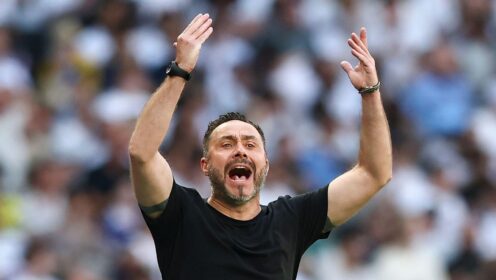
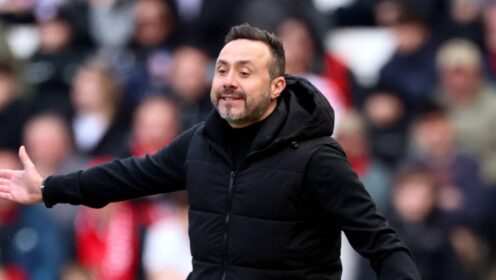
There is a lot to like. There was a certain mischief about the way Roberto De Zerbi nonchalantly made six changes to his starting XI from last weekend’s win against Ipswich. It’s a decadent luxury to be able to engage in that kind of nonsense without weakening the team in any meaningful way, especially for a one-game-per-week club as Spurs are this season, and especially at the home of a Sunderland team struggling desperately to put out a functional team twice a week.
It felt like taking the p*ss, but is more accurately a sign that De Zerbi is still trying to zero in on what, precisely, his best team actually is. We still don’t truly understand his reluctance to just build whatever that team might be around a midfield of Sandro Tonali and Mateus Fernandes, but what he’s doing is clearly working and that’s that. It’s not like he’s picking bad players in their stead. Just ones that aren’t quite as good, and for no apparently necessary reason, but currently to no great cost.
Spurs’ attack this time did not feature Luca Williams-Barnett from the start, with Omar Marmoush getting the nod on the left and doing… okay. His nimble turn and run on 10 minutes created the game’s most significant individual moment, prompting an embarrassed Thomas Meunier to rake his studs down the Egyptian’s Achilles and get a thoroughly deserved red card on VAR review.
It’s the third red card against Spurs in recent weeks, which is itself a part of making it so hard to pin down whether or not they’re actually any good. Meunier can have absolutely no complaints, because it really did just look like an attempt to do a player who had humiliated him, with the ball barely in the same postcode by the time he made the challenge.
But Spurs fans will inevitably have some questions about how the actual verdict given over the referee’s mic – “After review, Sunderland in No.12 catches his opponent with studs. That is serious foul play. The final decision is a red card” – squares with Jayden Bogle not being sent off in the one defeat Spurs have suffered in recent weeks at Leeds a few weeks back.
It didn’t exactly change the game, merely solidified and calcified what was already the likely pattern of play. Spurs would have lots of the ball, they would find it hard to break down Sunderland, who would live mostly on counter-attacking scraps.
Sunderland did retreat deeper from a mid-block to a low-block but, to their credit and Spurs’ chagrin, never withdrew from the ‘counter-attack’ part of that plan entirely.
Especially in the closing minutes of the first half, when they had multiple genuine opportunities to get back on level terms. Spurs survived that, and a dicey first five minutes of the second half to largely control proceedings from there on.
We might not still have definitive answers about Spurs in general, but this was a game that did harden some of our ideas about their defensive record, which is undeniably if curiously excellent. Since shipping three at home to Aston Villa in September, they have conceded only three more in their last seven games.
We’re not at all convinced they’re actually defending any better than they were in that run, or indeed under the misery-addled reigns of Thomas Frank and Igor Tudor last season. They simply do a lot less of it.
When Spurs are defending, it feels just as likely as it ever did that there will be a calamity, as there nearly was late on in the first half when Wilson Isidor got between Spurs’ centre-backs with alarming ease.
But when you have a division-leading 64 per cent of the ball compared to barely 50 per cent last season, there are just fewer opportunities for those mistakes to happen and also to matter when they do.
Six clean sheets for Toni Kinsky, more than anyone bar David Raya and Bart Verbruggen, is now an extreme but not entirely inexplicable outcome of that dominance Spurs generally enjoy on the possession charts.
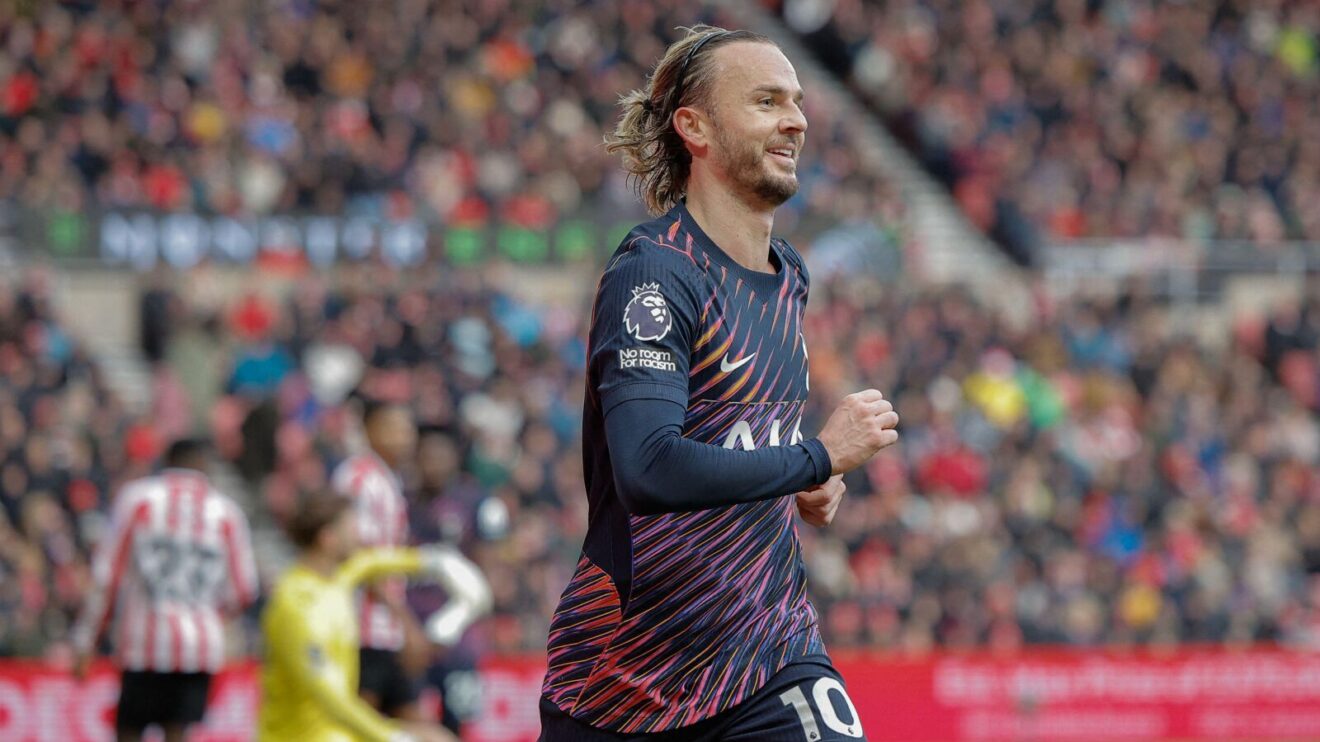
What Spurs definitely are is a more compelling football team with James Maddison in it. He is not perfect, but he has a creative spark and instinct for the mischievous that not many can match.
His two goals settled the game here, and the first was a rare piece of properly beautiful play in what Sunderland made through necessity a deeply physical encounter. Marmoush and the excellent Andy Robertson combined wonderfully well on the left, and the latter’s low cross was gorgeously flicked home by Maddison. It was an even better finish than it looked and, quite simply, one that no other Spurs player would have thought of, never mind executed.
It was a goal with potent Early Angeball vibes. Easy to forget now just how often he would make those kind of late-arriving runs into the box before his assorted knee injuries.
Only Maddison will know if he meant his second goal (he didn’t) which was we’re told the 22nd Olimpico in Premier League history. It was certainly a good one, because it swung an absolute mile from its starting line to embarrass Robin Roefs and bounce in off his post. Our suspicion is that Maddison was actually going for the big-swinging delivery to the man beyond the back post and the wind got it.
But it made the final 20 minutes comfy for Spurs. For Sunderland, it compounded their misery not just in this game but for an unravelling season in general. It came moments after Enzo Le Fee crumpled to the floor with nobody anywhere near him. We all know that rarely ends well, and a Sunderland team camped in the bottom three and already missing Dan Ballard, Granit Xhaka and Brian Brobbey simply cannot cope with further surgery to its spine ahead of a December that contains eight games across three competitions.
Spurs making six changes to their starting XI is now a flex; for Sunderland it would be a cry for help.
READ NEXT: Newcastle taking sweet time to reach potential but form against high-flyers bodes well