English football already counting the cost of changing climate


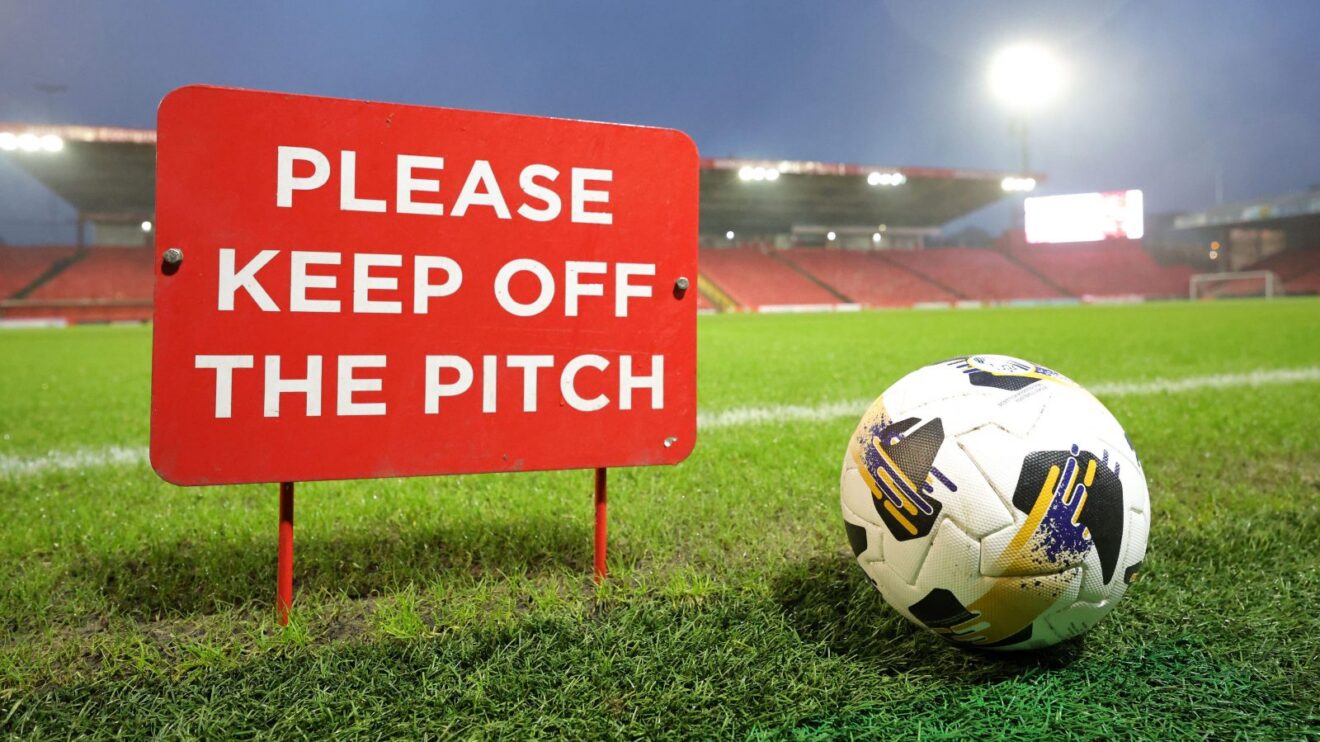
The usual response to a postponed football match is annoyance; supporters complain about wasted train tickets, managers complain about the timing of the rearranged fixture and everybody complains about the pitch inspection taking place shortly after the visiting team’s bus pulls into the car park.
A new Pledgeball study argues that these postponements should also be viewed as a warning about the financial consequences of climate change. For clubs operating on tight margins, losing a Saturday afternoon fixture to a waterlogged pitch is not simply an inconvenience. It can mean a smaller crowd, wasted stock, another round of staffing costs and less money passing through the turnstiles, bars and club shop.
The report, titled Addressing the Financial Impact of Climate Change on Professional Football in England and Wales, examined the top six tiers of the English men’s game over the five seasons from 2021/22 to 2025/26. Its aim was to estimate the minimum financial exposure created when extreme weather causes weekend fixtures to be postponed and subsequently squeezed into the midweek calendar.
Find out how you can help you team rise up the Pledgeball League table
Arriving at a precise figure proved impossible. There is no set amount of rainfall that will render every pitch unplayable, because drainage, soil, maintenance and local conditions vary from one ground to another. Clubs are not required to publish sufficiently detailed matchday accounts either, making it difficult to calculate exactly how much is lost when a fixture moves.
Instead, the researchers studied two related sets of information: recorded weather-related cancellations and the difference between weekend and midweek attendances.
Across the five seasons, they identified 118 matches postponed because of weather. The number rose from nine in 2021/22 to 31 in 2025/26, while 54 of the cancellations affected the non-league divisions covered by the research. Only two were recorded in the Premier League.
Even those figures are unlikely to tell the whole story. There is no comprehensive central database listing the reason behind every postponement, while reporting is less consistent as the study moves down the pyramid. The 118 cancellations should therefore be treated as a minimum rather than a definitive total.
The imbalance between divisions is hardly surprising. Premier League pitches are backed by advanced drainage, undersoil heating, full-time ground staff and the kind of maintenance budgets unavailable to clubs further down the system. At the top of the game, grounds are built to cope with an English winter. Elsewhere, a week of heavy rain can still turn a fixture list into optimistic fiction.
The second part of the study looked at attendances for every fixture played by 63 clubs across the six divisions. Bank-holiday games were excluded, Fridays were classed as part of the weekend and Mondays were counted as midweek. The researchers then compared each club’s average attendance during the week with its average weekend gate.
Midweek crowds across the complete sample were equivalent to 84% of weekend attendances. In the Championship, the figure was 89%. It dropped to 76% in League One and 74% in League Two.
Did you know, 100,000 tonnes of sportswear ends up in landfill every year in the UK alone?
That does not mean climate change has been proven to reduce League Two gates by 26%. The attendance analysis included every midweek fixture, not only matches rearranged following a weather-related postponement. The study does not control for opposition, television selection, league position or other factors that can influence demand.
What it offers is a measure of the risk. A club forced to exchange a Saturday afternoon slot for a Tuesday night know they are moving a game into a part of the week that routinely attracts fewer people. The financial hit might begin with ticket income, but it does not end there.
Smaller crowds buy fewer pints, pies, programmes, scarves and hospitality packages. A postponement can also leave clubs carrying the cost of perishable food, security, casual staff and matchday preparation before they have staged the fixture for a second time. There may be pumping and repair costs after flooding, increased water requirements during intense heat and, over the longer term, higher insurance premiums.
These pressures become more serious lower down the pyramid. Premier League clubs can absorb the occasional disrupted fixture and remain sustained by huge broadcasting and commercial revenues. Non-league clubs depend much more heavily on what they make when people come through the gate. Their midweek attendance gap may be smaller than those recorded in League One and League Two, but the money lost can matter more.
The problem is not confined to sodden winters. Flooding, drought and extreme heat can all make pitches unsafe or unusable. The Met Office projects that UK winters will become warmer and wetter, with winter rainfall potentially increasing by as much as 30% by 2070 under a high-emissions scenario. Summers, meanwhile, are expected to become hotter and drier, leaving football attempting to prepare simultaneously for too much water and not enough of it.
The briefing also points to Department for Culture, Media and Sport research that estimated the annual financial impact of adverse and extreme weather on grassroots sport at just under £320 million. That cannot all be blamed on climate change, because bad weather was expensive long before global temperatures began setting records. The government study nevertheless projected that the annual cost could increase by approximately £95 million with 2°C of warming and £190 million with 4°C.
Pledgeball want the Independent Football Regulator to commission a full inquiry into climate risk within the professional game. They also argue that environmental sustainability should form part of the IFR’s club-licensing requirements and that funding should be linked to measures that help clubs adapt.
English football has spent years debating financial sustainability as if it begins and ends with wage bills, owner funding and parachute payments. Those matters are important, but a club cannot stage a match on an unplayable pitch. If extreme weather continues to cancel more games, the cost will be felt most severely by those least equipped to meet it.
Watch Route ’26: Losing Sight of Goal, by following Pledgeball on Instagram and YouTube