Pochettino swaps roles with Klopp as Manchester United debut priority becomes clear
For a manager who cited fatigue as one of his reasons to step down and away, Jurgen Klopp knows his dynastical decade at Liverpool was largely defined by energy.
The sort he transmitted from the touchline and in the media, of course, but mainly the physical effort he inspired almost immediately from his players.
While the clubs and situations they inherited are far from identical, it does feel like Klopp’s elite-level overall cultural transformation provides the closest possible proof of concept for Mauricio Pochettino at Manchester United.
Two largely aimless teams weighed down by what Klopp called “a 20kg backpack” of “history”, having an absurdly gifted orator and coach fall into their lap in an international break. Liverpool in 2015 were not nearly as broken as Manchester United in 2026, but the general need to achieve an unthinkable metamorphosis of a fallen giant where many before them failed is there.
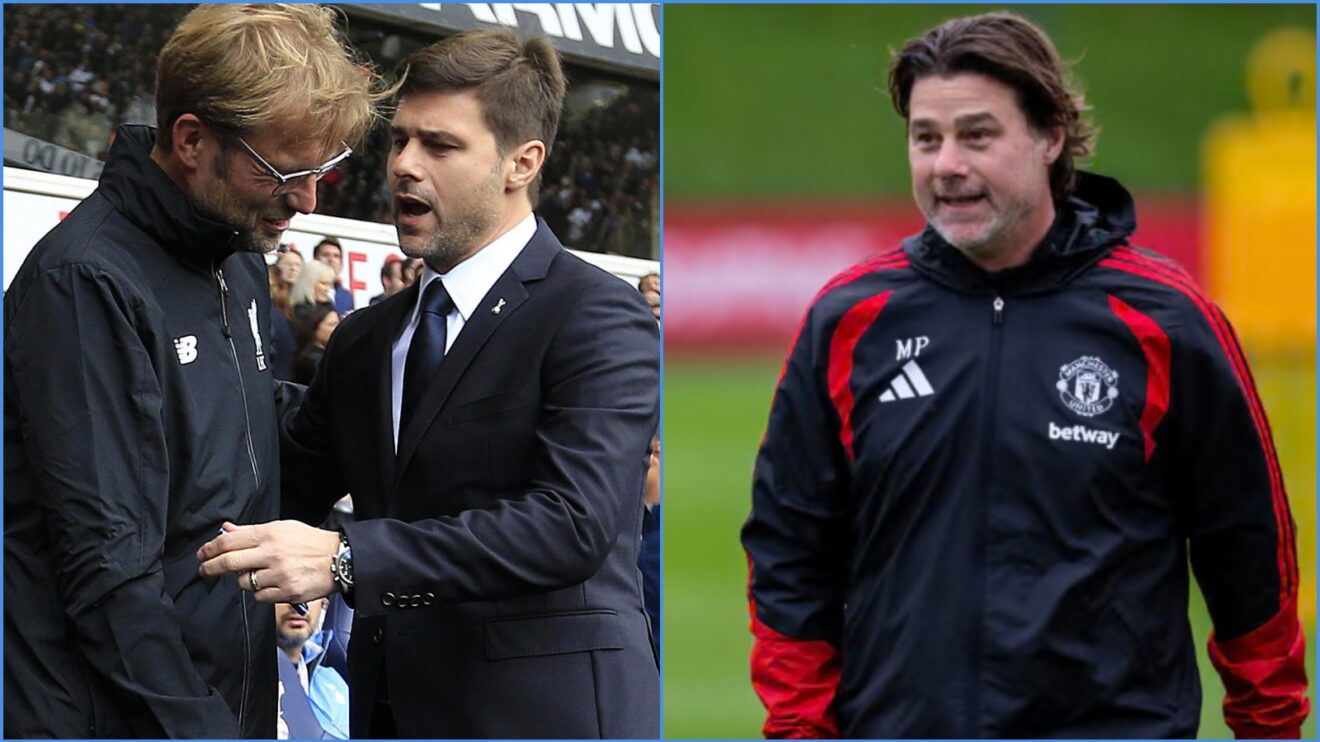
How useful, then, that Pochettino had such a good seat for the start of the Klopp era.
“These guys are running for their life,” said the German after his first Liverpool game: a goalless, tireless draw at Tottenham in October 2015.
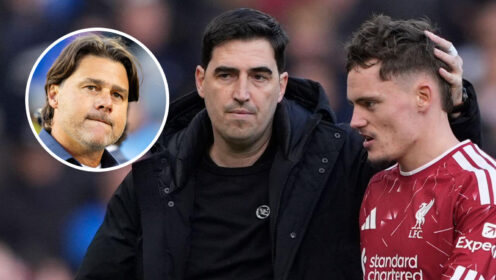
Klopp praised the “machine” James Milner, optimistically suggested that Emre Can “can learn between running and passing”, and said Adam Lallana “can do 20 to 30 per cent more” after the exhausted England international collapsed into the manager’s embrace upon being substituted with ten minutes remaining against Pochettino’s side.
“I’m not here to promise you will see against Tottenham the absolute new Liverpool,” Klopp had stressed in the build-up, “but some of the new Liverpool would be cool”.
The Reds ran at least 4.1km further than in any of their previous eight games, becoming the first team to cover more distance in a Premier League match than Pochettino’s Spurs that season in the process.
It was a thoroughly imperfect performance, as many with Divock Origi leading the line, Lucas Leiva in central midfield and Alberto Moreno at left-back were, and no-one could possibly have predicted the journey Klopp was going to lead Liverpool on thereafter. But in retrospect, the seeds of success were sown as early as that knackering first game.
That has to be the hope for Pochettino – not necessarily to dominate or even beat Liverpool – just to showcase “some of the new” Manchester United.
In his first official address he stressed that they “need to be ready to compete” and arrive “in the best condition” on Sunday. And if these players can’t rise to the occasion of a manager’s first game, away at Liverpool, with a win potentially catapulting them out of the relegation zone, then they might be the most lost of collective causes. And doing housework on GTA might not provide ample mitigation.
It is a meeting which pits against one another the two Premier League teams to have covered the least distance so far this season. Both sides shamefully rank at the bottom of that barometer for deliberate tactical reasons of admittedly drastically different success.
Under Andoni Iraola, Liverpool’s insatiable pressing lends itself better to short, sharp bursts of sprinting than James Milner-adjacent shuttle runs. And Manchester United won games under Sir Alex Ferguson more than a decade ago without physically exerting themselves too hard, so Michael Carrick’s DNA-covered hands were tied.
Pochettino warned that it is “dangerous” to “talk about things without context” when asked about those numbers, but that had more than a hint of professional courtesy extended towards his predecessor – a desire not to wade into criticism of Carrick.
This is the same Pochettino who once wrote, in his diary of that memorable 2016/17 Spurs season:
‘The most important thing is the players’ fitness. Footballers aren’t machines, they need rest and training regimes to be able to compete for 10 months.
‘Whenever there is a World Cup or European Championship it makes for a tricky pre-season. Players report back later than usual and are often burnt out, short of motivation.’
The pre-season comments from Youri Tielemans have provided an uncomfortable backing track echo for three miserable opening months.
It is ultimately one of the first aspects Pochettino will look to amend, and the easiest to measure an immediate improvement in after so few bedroned training session. Sorting the defence is a close second, but actually cajoling and coaxing some more kilometres out of a coasting squad should be the quantifiable priority with such a quick turnaround.
United have been outrun in eight of their ten league games – ten-man Manchester City at home and the Aston Villa draw are the only exceptions – and are not likely to dominate the ball against Liverpool. They will spend a lot of time chasing, but as Pochettino said earlier this week: “You need to run well. You need to run with an objective, you need to run together.”
A pertinent example to follow was provided by the team they face. Whether it’s Mason Mount falling into Pochettino’s arms, Luke Shaw bleep testing his way through an injury-defying 90 minutes, or Bruno Fernandes sprinting around with slightly more control and nous instead of trying to spring one-man presses before throwing a tantrum, the first sign of whether Pochettino can make this work at Manchester United needs to come at the earliest opportunity: Sunday at Anfield.