Why England fan violence towards women is an everybody issue


This article is written by George Lovatt and appears on his excellent Substack ‘The Sport of the Future’…
I had no response. What she said was clear and without reproach. “Don’t you know domestic abuse goes up during the World Cup?”
It was 2014. My friends and I had created an echo chamber convincing us that Roy Hodgson’s England were destined to win the World Cup. And my belief was that this was a cause that all people, football fans or otherwise, should get behind, as such a triumph would trigger scenes of jubilation not seen in this country since VE Day. My friend felt differently.
Like many football fans I acknowledged this fact, would never deny it – but I have also found it difficult to truly sit with it. To take time to really, properly think about what this means. That as me and my mates rejoice, women in my town, potentially down my street, suffer. That an upcoming England campaign brings dread rather than excitement.
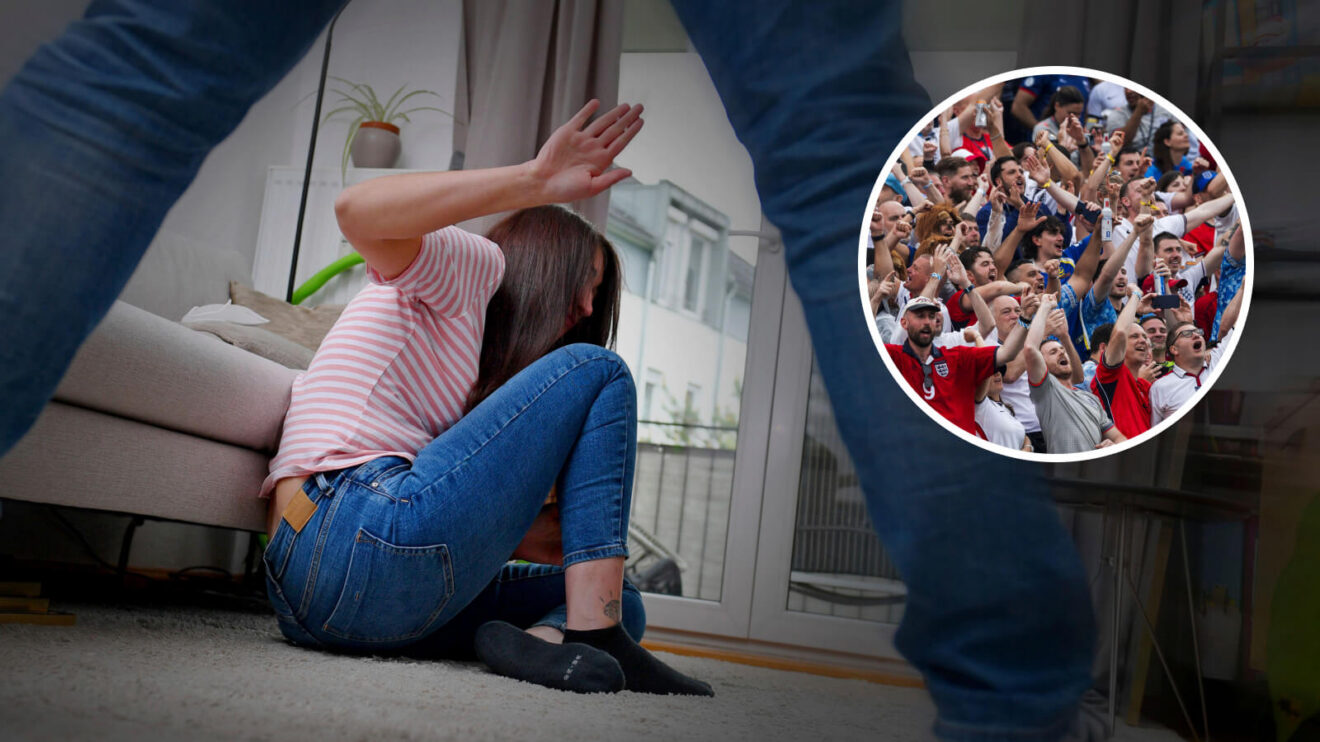
The statistics are damning. A 2013 study found that domestic abuse incidents increased by 38% when England lost at the World Cup; perhaps surprisingly they also rose by 26% when England won or drew.
More recent analysis shows that the risk of alcohol-related domestic abuse rises by 47% when England win. Incidents also increase by 11% the day after a match, regardless of the result.
Over the next few weeks this national scandal will not go undiscussed – Radio 4’s Woman’s Hour will likely dedicate a whole show to the issue, Loose Women a segment – explaining where women can go if they feel they are at risk, who they can contact if they fear for their safety. This information is invaluable, potentially lifesaving, but it’s only half the conversation that needs to be had.
Domestic abuse, along with period poverty and the gender gap, is one of the societal ills that is safely categorised as a women’s issue. This gives men free rein to not have to act, care or think about the problem. But domestic abuse isn’t a women’s issue. It’s an issue that affects women, it’s an issue that harms women, but it’s not one caused by women.
It’s men. Men being unable to regulate their emotions. Men not dealing with their issues in a productive or meaningful way.
On August 25 2019, I had probably the worst argument I’d ever had with my mum. We’re very close, so it’s rare. We’d had family around for a summer barbecue, yet throughout the evening I’d felt a moodiness, a malaise that I couldn’t shake. After everyone left, and we’d both had a fair amount to drink, I began to moan. I moaned about everything: my summer job, university, all of it. It was the wrong time to air such feelings. She had a go at me, justifiably, and I burst into tears.
August 25 2019 was also the day that Ben Stokes orchestrated one of English cricket’s greatest victories. With the Ashes on the line, Stokes hit a match-winning century to level the series. I’d lived every ball, counted every run. I’d sweated, I’d paced, the whole afternoon an agonising wait for the tension to be punctuated until Stokes hammered Pat Cummins for four and secured victory. I felt it all – that rush, that relief, the joy when your team finally gets over the line.
And then what?
You bask in the celebrations, you enjoy the pundits revelling in the win, listen to every post-match quote uttered by your heroes – and then with a smart and pithy line delivered to camera, it all ends. You’re sat with the remote in your hand as the Football League highlights start. It’s all over, and in a way it feels like it never even happened, that it never even really mattered. Yet your body is still feeling it.
I’m not in the dressing room sharing a beer with my teammates. I’m not Ben Stokes awash with pride at the feat I’ve just achieved. I’m just a bystander, hoping to feel a reflection of their glory.
It’s a feeling that sport scarcely chooses to recognise. The emptiness of victory. It’s this feeling – the intense longing for my team to win only for it be followed by an emotional anti-climax – that snowballed into having an argument with my mum, and I believe it often fuels the violence that occurs after England wins.
I remember when England led in the 2021 Euros final, being struck with another worrying sensation. I’d been England-obsessed the whole month, every thought in my head revolved around who we were going to start on the wings, what was our path to the final. Yet, with England just half an hour from triumph, I realised that the next morning I’d wake up with the all same old worries. Concerns about what my next job would be, when I’d move out of my parents’ house, wondering whether I’d ever fall in love. Gareth Southgate could’ve ended 55 years of hurt, but he couldn’t have solved all of that.
But sport and its branding often tries to sell us a different story. It dangles the carrot, that your team winning will cure all your ills. That the joy will never dissipate and fade. It’s even more the case with England and their pursuit of major glory; a tale of glorious failure so intertwined with national decline. And when, after a few rough years, this story becomes tied to your self-worth, the team’s shortcomings mirroring your own, then the anger and pain caused by defeat and the unhealthy craving for victory becomes all the more severe.
The final whistle brings with it a jolt back into reality that many people are not equipped to handle. When you consider what’s happening internally, that throughout a crunch football match the body is reacting as though it’s about to chucked into the colosseum to fight a Bengal tiger – and then throw in the influence of booze and other substances – then it’s no surprise that such devastating incidents occur.
This not an excuse or an attempt to absolve the actions of perpetrators. They are responsible for their actions. But it gives us an understanding of why these incidents rise.
So what needs to be done? I believe that there needs to be a genuine national conversation, that stretches outside the confines of women’s media. I want prominent figures in football, along with politicians (not Sarah Pochin, please) and other voices with sway, to talk about this properly, earnestly, and consider why this sport can have such a detrimental impact. I don’t want anyone to brush this issue off, and brand the culprits as ‘not real football fans’.
And I think it’s a good time for us to acknowledge something. If England win the World Cup, it will be nice. There will be glorious scenes, an open-top bus, we will be united and re-united with friends throughout the celebrations. But I’ve seen my teams win before: The Lionesses at Wembley, England at Lord’s, Essex at Edgbaston, and you know what, the feelings pass pretty quickly. They become happy memories and videos you re-visit when you’re feeling down on a Sunday night.
Harry Kane lifting the World Cup won’t change your life. It can’t change your job prospects, it can’t improve the health of your grandparents. And the sooner we acknowledge football’s limitations, the better equipped we are to reducing the hurt it causes.
If you this is an issue that affects you then help is out there. Refuge have a 24/7 hotline that you can contact at any time. Calls are free on 0808 2000 247. They’ve also started a petition looking to raise awareness about the issue of rising incidents throughout the World Cup.
If someone you love is a survivor of violent or sexual crime, then you can get in touch with Restitute. They offer practical and personalised support for 3rd party victims of crime. The work they do is life-changing.
This article is written by George Lovatt and appears on his excellent Substack ‘The Sport of the Future’…