Good process, occlusion, missing offside lines and missed handballs – the Premier League’s 10 biggest VAR f*ck-ups


We’ve resisted for as long as we can, but we now simply have no choice.
Here, then, against our better judgement, are the 10 biggest VAR f*ck-ups in Premier League history.
We haven’t included that one against your team, by the way, because, just like VAR itself, we are biased against your club.
10) Erling Haaland goal disallowed v Liverpool
So number 10 on our list of the biggest VAR errors in the Premier League is a decision VAR got indisputably, inarguably and objectively correct. We include it very deliberately, because more even than most actual errors or controversies with VAR, it highlights perfectly how VAR itself is an error. How even when it’s right, it’s still wrong. It still spoils things.
This goal, scored at the very end of Manchester City’s win over Liverpool last season, is a dagger through the heart of The Sensibles’ suggestion that all the inconveniences of VAR – its miserable, deadening impact on the most fun thing about football – and even its mistakes are worthwhile because in the round we end up with a higher percentage of correct decisions.
The problem? VAR was introduced to a game that, unlike those where video technology can and has worked well, simply wasn’t built to handle it. And it was introduced due to the furious demands of fans and pundits. And the thing with fans and pundits is that they don’t actually want all decisions to be correct. They might think they do, they might say they do. But they don’t, not really.
But what the vast majority of football fans and pundits want is for decisions to go in their team’s favour. And even if they don’t have a dog in the fight they want decisions that feel right far more than they want decisions that are actually right.
Football fans and pundits, in essence, wanted a realistic, down-to-earth VAR that’s completely off the wall and swarming with magic robots, and also, you should win things by watching.
And this goal proved it. The details, as you’ll remember, were incredibly straightforward. City were leading Liverpool 2-1 in the dying seconds at Anfield when Haaland was bearing down on an empty net seemingly certain to score. Dominik Szoboszlai crudely fouled him in an attempt to prevent him doing so. Haaland then crudely fouled Szoboszlai to in fact be able to do so. The goal was given on field, and this felt like natural justice. This felt like the common-sense outcome.
But the V in VAR does not and never can stand for Vibes. Once it got involved, the goal had to be disallowed because Haaland had only been able to score by committing a foul. Of course, he had only had to commit that foul because Szoboszlai had fouled him. So the inevitable verdict was reached: goal disallowed, we go back to the initial foul for a City free-kick, and Szoboszlai was sent off for denying a goalscoring opportunity.
The true beauty of this as an acid test for VAR was that this outcome – this inevitable outcome once the robots had been given the keys – helped and suited absolutely nobody. The outcome of the game was the same but City and Haaland weren’t happy because they were denied a goal, and Liverpool and Szoboszlai weren’t happy because he was now sent off and suspended for their next game.
And neutrals weren’t happy because a goal that was a) funny and b) felt like justice had been taken away from all of us. ‘Just give the goal’ was the consensus from a punditocracy that spent years and years demanding that robots make cold, calculated and always correct decisions for us. Which, it turns out, was never what they actually wanted.
Which is key to remember for all that follows here. VAR can and will f*ck things up and will never be the prince that was promised. But even when it does work perfectly it can and will still feel like it’s f*cked things up because it was brought in to serve a fickle and unreliable master: us lot.
9) Marcos Senesi’s penalty v Crystal Palace
Not the most memorable but one of the most egregious examples of a non-intervention from VAR after Marcos Senesi, in his Bournemouth days, pounced on a loose ball in the Crystal Palace area and, having knocked the ball awkwardly away from goal but noticing Dean Henderson existing within his personal space, decided he had quite literally no option but to fall over.
Officials both on-field and in Stockley Park inexplicably felt they too had no option at this point but to point to the spot for reasons that remain a bafflement.
8) Bruno Fernandes’ offside goal given v Manchester City
The good thing about this highly controversial goal in a Manchester Derby at Old Trafford in which a goal scored by one team’s star player was allowed to stand due to a loose interpretation of whether a demonstrably offside team-mate had influenced the play is that VAR will always learn from its mistakes and ensure that the same error will never occur twice.
Some have argued this was even more egregious than the Haaland goal at the weekend. We would stop someway short of that, but what this goal did show even better than the Haaland one is how ill-suited football’s laws are to VAR.
Because football’s laws have always been really quite seriously vibes-based in a lot of situations. And VAR has forced the game to try and tighten up a lot of those vibey areas, often leading to absurdity.
Pretty much every football fan would feel in their bones that a visibly offside Marcus Rashford running for a loose ball with apparently full intent to kick the bugger at City’s goal would constitute interfering with play and thus trigger an offside. That feels like the right outcome, and the fact he decided at the very last second to leave it for Bruno instead is neither here nor there.
Certainly, there would not have been widespread kerfuffle had the goal been disallowed. But because football has had to try and more tightly define what constitutes a player actually becoming an active participant in any situation and triggering an offside offence beyond ‘well, we know it when we see it’ what we’ve actually ended up with is a far narrower set of parameters.
If you wanted to be a f*cking nerd about it, there was a compelling case that Rashford’s action here, despite how it hit supporters and pundits in the feels, didn’t actually meet any of the now relevant criteria to make a player offside. Because ‘sprinting for the ball and then bailing at the last minute’ isn’t on there.
READ: Marcus Rashford starring in One Man And His Ball shows the offside law is an ass
7) Rodri’s undetected handball v Everton
Handball is, of course, the other great impossibly woolly area with which VAR has and continues to struggle. There have been different approaches. Many’s the Champions League night that’s been ruined by what is now close to a strict liability interpretation of the offence that makes penalties too cheaply won too often.
We’ve also, once again, had to change the fundamental rules of the game in the desperate pursuit of the unobtainable perfection we supposedly seek, making handball by a goalscorer an actual strict-liability offence regardless of intent.
That one still p*sses people off, and you only have to go back 10 days to find an example with the unavoidably correct decision under the current rules to deny Neco Williams’ goal against Spurs prompting player, pundits and journalists alike to cry foul by using the much-loved ‘clear and obvious’ complaint despite it having no relevance in that moment.
So yes, handball is another unsolvable puzzle that dooms VAR to fail. But it also doesn’t help when it just completely fails to detect really, really, really, really obvious handballs that are clearly handballs and that meet any reasonable definition anyone has ever had of what handball is, like Rodri playing basketball in the Everton penalty area that time.
6) Wolves penalty not given v Manchester United
Manchester United were holding a deeply unconvincing 1-0 lead late in their season-opening clash against Wolves back in August 2023 when their debutant goalkeeper did something mental. Andre Onana – you remember – came out for a cross. He missed the ball and took out not one but two Wolves players.
He probably fouled Craig Dawson. He definitely fouled Sasa Kalajdzic. The only people on planet earth who didn’t think this was a penalty were Onana, on-field referee Simon Hooper, and the lads in the VAR broom cupboard at Stockley Park.
The timing and location of the decision provoked the inevitable dark rumblings about big-club bias and pressure. Onana we can at least assume would have been consistent in his nevertheless absurd position that no foul had been committed regardless, but would Hooper and the VAR spods have treated this incident any differently had it occurred at a different ground or a different end or a different point in a different match? Only their conscience will know the answer. The rest of us can only guess.
But it certainly felt at the time like a very human failing from a system that, as we’ve established, we only want to show human failings when it suits us.
Either way, it was a mistake followed up by the usual round of apologetic statements and standing down of officials for a week and absolutely nothing that actually helped Wolves at all.
Wolves, of course, are also the only Premier League club current or past who deserve any actual sympathy over a dodgy VAR call because they were the only ones who voted to fire the whole thing directly into the sun.
5) Erling Haaland’s offside goal given v Manchester United
The latest entry into the pantheon and one whose significance in settling an early-season Manchester Derby City’s way only adds to the heft of an egregious error.
There are still those so confused by this goal that they think Erling Haaland himself was offside because of how the initial unhelpful replay still was presented from a deceptive angle. That is not the issue here.
The issue is that a very offside indeed Enzo Fernandez flung himself full length at an attempted diving header while occupying the full attention of United defender Lisandro Martinez and at least some of the attention of keeper Senne Lammens before Haaland cheerfully whacked the ball home at the back post.
There is definitely again relevance here in the now specifically defined parameters of what constitutes an offside offence serving only to narrow the definition and leading to absurdity, but also this was just a VAR f*ck-up. They got so bogged down in checking whether Enzo actually touched the ball that they apparently clean forgot they didn’t need to worry about that.
Even under offside as it’s now framed, one of the definitions is:
A player will be penalised if they are…
Clearly attempting to play a ball which is close when this action impacts on an opponent
Enzo could not have met this definition more perfectly had he tried.
Another element to highlight the obvious farce of this particular decision is that given how it all eventually played out, Martinez’s best course of action would in fact have been to foul Enzo. Just boot him into a penalisable state.
4) Pervis Estupinan’s onside goal disallowed v Crystal Palace
Much of what we’ve already covered are decisions that, while pretty clearly absurdly wrong (or in one case absurdly right) do at least fall under some suitably woolly and subjective umbrella or other that offers the tiniest veneer of mitigation or defence.
We’re now moving firmly into the realm of the objectively, catastrophically, embarrassingly and measurably wrong. Brilliantly, two of them happened on the same weekend.
First up comes Pervis Estupinan’s goal for Brighton back in 2023 being disallowed for offside after a VAR intervention.
The only teensy little problem was that Estupinan was in fact not in any way offside. Unless, that is, you drew the offside lines from James Tomkins instead of Palace’s actual last defender here Marc Guehi.
Alas and alack, that is exactly what John Brooks did before wrongly disallowing the goal.
Worth noting here in the interests of fairness that this cock-up wouldn’t happen now. Sure, VAR will never be anything other than a blight on the game, but that doesn’t mean it hasn’t become a slightly less sh*t version of that blight over the years. The fact we’ve moved on from nerds in a bunker getting their set-squares out to draw made-up lines on blurry still images and call them definitive is undeniably progress. Of sorts.
Still, though. One of the great VAR errors, prompting once again the usual round of apologies and standing down of officials and a news line that reads very differently in 2026 to how it did in 2023.
John Brooks, who wrongly disallowed a Brighton goal against Crystal Palace on Saturday, has been replaced for two Premier League matches he was due to officiate this week.
Brooks had been due to act as VAR for Monday night’s Merseyside derby and the Arsenal v Manchester City match on Wednesday, but Professional Game Match Officials (PGMOL) has confirmed Brooks has been replaced by Andre Marriner and David Coote respectively for those matches.
3) Sheffield United’s occluded goal not given v Aston Villa
A particularly special f*ck up this one, because it is the only to include the one piece of football decision-making tech whose survival even the most strident anti-VAR campaigners would tolerate. Goalline technology.
Not before or since has it made such a mess of things. The Hawk-Eye system has been almost flawless for thousands and thousands of games. Almost.
It has none of the other issues with VAR, you see. It’s officiating only on a matter of vital significance to the game – goals – and only on a matter of objective, measurable fact. Did the ball go in? Yes or no. And, most importantly, it delivers that decision instantly. It works brilliantly when it’s needed, sits there quietly not bothering anyone at all when it isn’t, and has basically no drawbacks.
But even it isn’t perfect. And, in fact, it being so very close to perfect was actually its undoing on the one occasion it went catastrophically wrong. Because so reliant upon and trusting of had everyone become of the goalline technology that all the officials on field and in the VAR bunker – who could under the rules have investigated further at the time had they wanted to – just ignored the evidence of their own eyes or on the screens in front of them.
Hawk-Eye had never been wrong before so it must once again be Human-Eyes that are wrong here. That ball that is very clearly in the goal simply cannot be, for Hawk-Eye says so.
But here’s the thing: it very obviously was clearly in the goal. So clearly were Aston Villa keeper Orjan Nyland and the ball over the line that they were literally entangled in the net – if not quite in the Holte End as an understandably rattled Blades boss Chris Wilder claimed – when he caught it.
Yet somehow, all seven Hawk-Eye cameras missed it. All obscured by some combination of post, defender, attacker or desperately flailing keeper.
We all got to learn the word occlusion. And Aston Villa got a point that allowed them to stay in the Premier League, as long as you take the, well, deeply occluded view that literally everything else that happened in the rest of that match and the entire run-in would have gone exactly the same way as it did in the timeline where for one brief moment Hawk-Eye was blinded.
Still, you could certainly understand why a Bournemouth side who were ultimately relegated after finishing a point behind Villa with a superior goal difference weren’t particularly interested in anyone telling them about chaos theory and the butterfly effect.
2) Ivan Toney’s offside goal given v Arsenal
Pretty crazy really that two of Premier League VAR’s three most ludicrous offside errors happened on the same Saturday in 2023.
Brighton were denied a goal against Palace because the Stockley Park Clown Show Banter Hour drew the wrong lines on the picture. That is very bad. But at least they tried.
That same day Ivan Toney’s equaliser for Brentford against Arsenal was allowed to stand after VAR couldn’t even be bothered to draw the lines to check whether Christian Norgaard was in an offside position in the build-up to the goal. SPOILER ALERT: Christian Norgaard was totally in an offside position in the build-up to the goal.
For neither the first nor last time, VAR got itself so bogged down checking one specific thing that didn’t really matter that it ignored something far more obvious that definitely did. The focus during the check on the goal was all about whether Ethan Pinnock, also offside, had blocked off Gabriel Magalhaes in any way.
So busy were they looking for a non-existent infringement there they didn’t spot Norgaard, whose cross Toney headed in, hiding in plain offside sight.
Luckily, none of it really mattered. It’s not like Arsenal were in a title race or anything where the dropping of two points could be considered significant in any way. And Arsenal are, in any case, famously a club that will always suffer the slings and arrows of outrageous fortune with a certain quiet dignity.
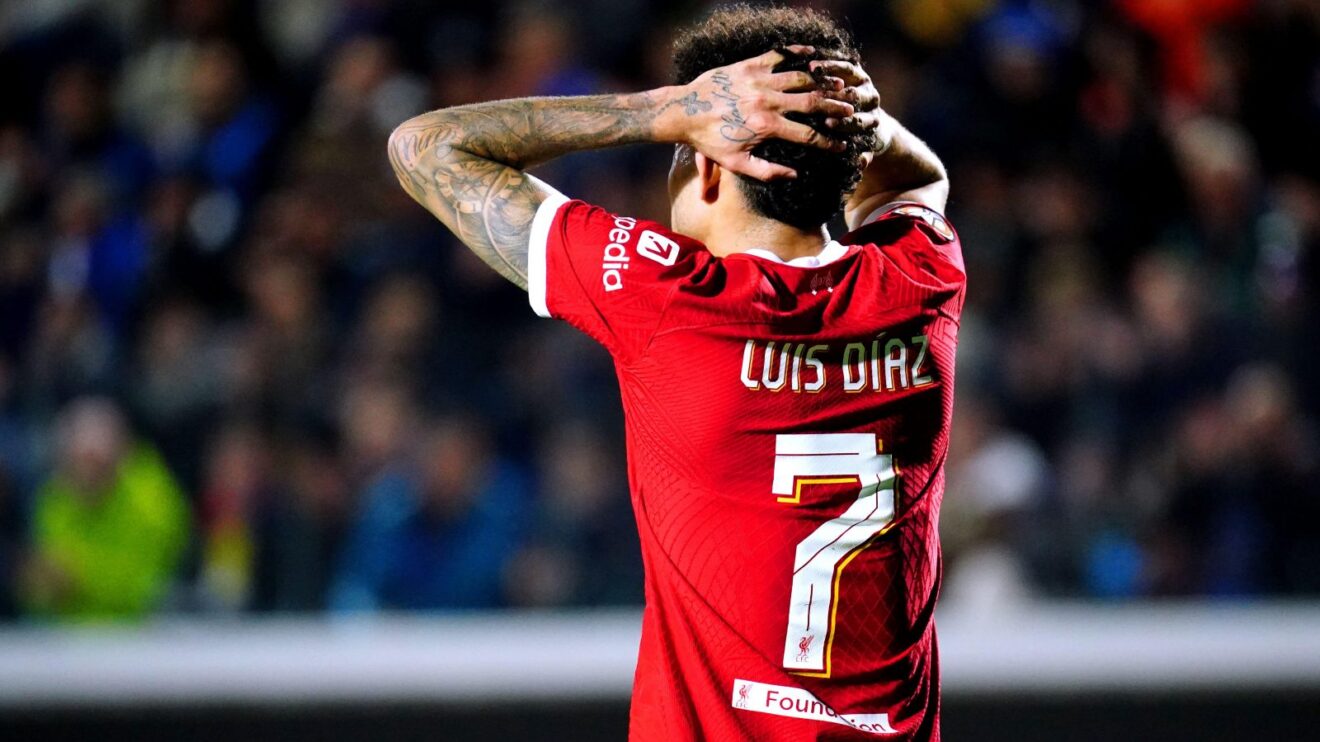
1) Luis Diaz’s ‘good process’ goal not given v Tottenham
We imagine we’ll be updating this feature at some point in the future. In fact, we’re near certain of it, VAR being what it is. We can’t, though, imagine we’ll ever be moving this from the number-one spot.
But… imagine if we do. Imagine if VAR ever does a bigger sh*t on the carpet than this one. What a time that will be to be alive.
Because this one was and remains the benchmark against which all other VAR sh*tshows must be measured and found wanting.
This is as good as it gets. By which we really mean this is as bad as it gets. The issue, fundamentally, is that nobody in the VAR room – with the sole agonised exception of the lowly replay operator who clearly feels powerless to intervene directly and tries desperately to get everyone else to grasp what’s about to happen – is paying attention.
They literally didn’t notice what the on-field decision was. That Luis Diaz, played yards onside by Cristian Romero, had in fact been given offside on field. This fundamental error led to the VAR, mistakenly believing a goal had been given, giving only the most cursory check before confirming the on-field decision. The problem being that this was not the decision they thought it was.
It highlighted every flaw in the system, not least the woolliness of the language in the conversations between the assorted officials that allowed for the initial confusion to snowball into a proper sh*tstorm.
Clearer protocols around the language used would’ve meant the initial mistake over the precise on-field decision that had been made either wouldn’t have happened at all, or would’ve been nipped in the bud early in what would infamously be described as the ‘good process’ of reaching the decision.
The scale of the mistake alone would make this number one anyway, of course, but the fallout from it only elevates it to greater heights. So ludicrous did it all become, that we really think we might be serious when we say the fun we all had in the days after the incident are in fact the one thing that makes us think VAR might be worth keeping after all.
It doesn’t do the job it was supposed to do very well, it can never appease or satisfy its inevitably fickle masters, and it thoroughly spoils the fun and flow of games even when it does work as intended.
But when it f*cks up as magnificently as it did that fateful afternoon at the Tottenham Hotspur Stadium? Content for days.
The full audio of the VAR conversations in the build up to the catastrophe remains some of the greatest comedy we’ve ever heard. It is Brent x Partridge x Curb, and all produced off the cuff by a group of blokes supposed to be doing a serious job.
Then, of course, you had idiotic calls for the game to be replayed which made people laugh at Liverpool, at which point sensible Liverpool fans were forced to come out and say ‘No serious person is seriously calling for a replay actually’ only for Jurgen Klopp himself to then come out and call for a replay three days after the event to give the news cycle another jolt and lead to some incredible mental gymnastics in which Klopp saying the stupidest thing imaginable in that situation was in fact the great man playing 4D chess rather than demanding something absurd that he was obviously never going to get.
And to this day there is a significant – very possibly still growing – chunk of the Tottenham fanbase who believe they are still being punished by officials for the events of that infamous day because they don’t ever really get given penalties anymore.
It always was and always will be one of the very greatest processes.