England E-Team features greatest player never to feature at major tournament
England are short on E numbers but there’s enough to make an XI, including the country’s greatest player to have never featured in a major tournament.
Goalkeeper: Fred Else
Only 14 players are eligible for the E-Team and there’s no goalkeeper amongst them. Former Chelsea academy prospect Rhys Evans lined up for the Three Lions’ Under-21 side, whilst Neil Etheridge also appeared at youth level before switching international allegiances to Singapore.
Someone else gets the nod though; Fred Else to be precise. Unfortunate to have remained uncapped having spent over a decade in Lancashire as number one for Preston North End and then Blackburn Rovers, Else played in a 4-1 win over Scotland for the England B side in 1957.
Right-back: Bill Ellerington
A long serving full-back for Southampton in the immediate post-war era, Bill Ellerington stayed at the Dell for his whole career. Ellerington’s strength and accuracy from the right flank kept Alf Ramsey out of the Saints XI and prompted the future World Cup-winning boss to make a switch to Spurs. Whilst Ellerington prevailed in the battle at club level, he lost it when it came to the Three Lions, with Ramsey preferred for the number 2 shirt come the 1950 World Cup.
Left-back: Bill Eckersley
Joining Ramsey in the squad chosen for the country’s first foray into the World Cup was Bill Eckersley. A loyal servant to Blackburn Rovers, just like D-Team winger Bryan Douglas, Eckersley’s excellent form at Ewood Park saw him make the England left-back spot his own in the early fifties. His international career ended after the infamous 6-3 defeat to Hungary in 1953 that saw the Three Lions lose their distinguished unbeaten home record against foreign opposition.
Centre-back: Willis Edwards
Exceeding initial expectations as Elland Road, some pondered whether Willis Edwards’ lack of physical attributes would leave him unable to compete with the rough and robust defensive players of the era. However, Edwards’ perfect timing in the tackle and technique moving forward helped him become a firm favourite with Leeds United fans and earn him an England spot. He became a regular for the Three Lions in the late 1920s and captained the side to a 6-0 win over Wales in his final international appearance
Centre-back: Ugo Ehiogu
A scorer in Sven-Goran Eriksson’s first game as England boss, Ugo Ehiogu bagged the third goal in a 3-0 win over Spain in the familiar surroundings of Villa Park a quarter of a century ago. It was Ehiogu’s second cap, having made his debut five years earlier under Terry Venables. It was an era of fierce competition at centre-half that curtailed the 1996 League Cup winner’s international prospects and despite having a front row seat to David Beckham’s famous free-kick against Greece, he failed to make the cut for the 2002 World Cup squad.
Defensive midfield: Duncan Edwards
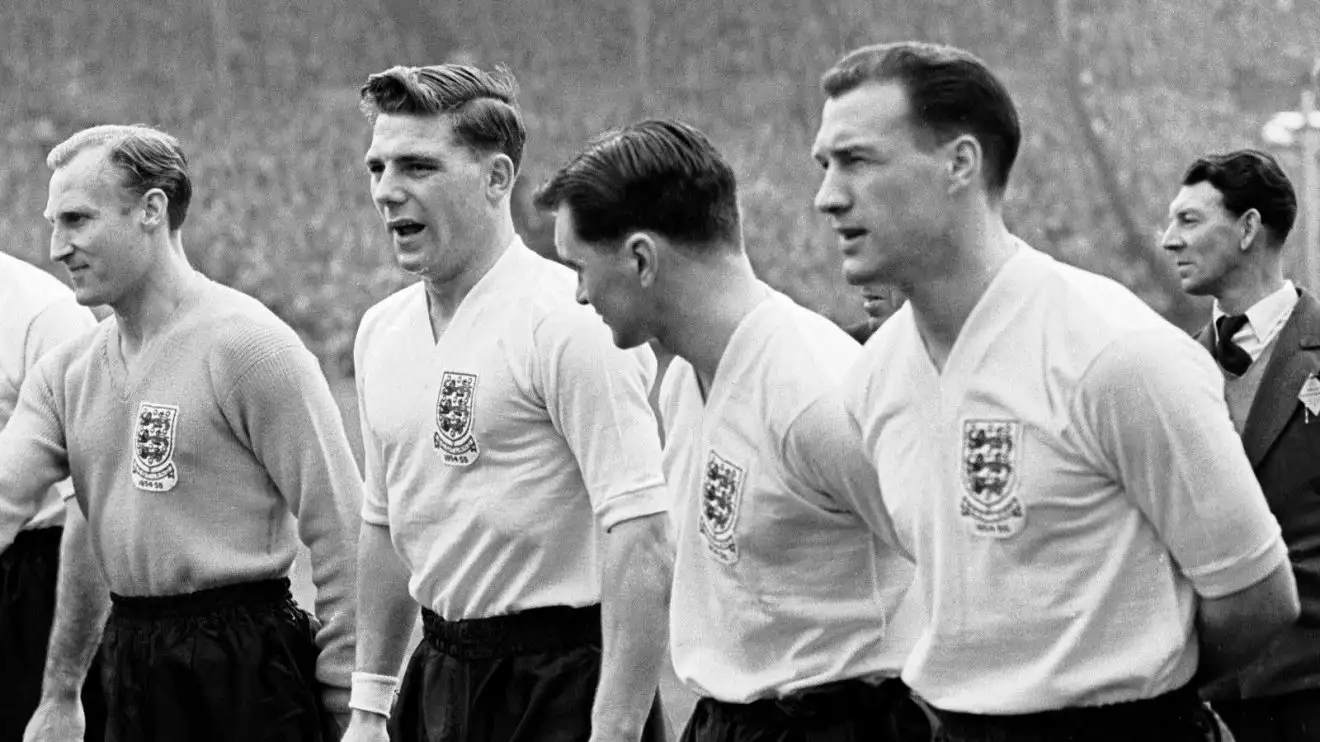
The E-Team certainly isn’t the best of the alphabet bunch but they do have one of the most naturally gifted English players of all-time, despite the fact he never played at a major international tournament.
Indeed, if the Munich Air Crash never happened, it’s fair to assume a 29-year old Duncan Edwards in his pomp would’ve been the Three Lions captain in 1966 and the iconic image of England’s greatest triumph would look very different.
Fearsomely strong at such a young age, Edwards was the crown jewel of the Busby Babes and his dominant displays for Manchester United led to him becoming the country’s youngest international of the 20th century, making his debut aged 18 in a 7-2 win over Scotland alongside a 40 year-old Stanley Matthews.
Attacking midfield: Eberechi Eze
With Edwards able to cover acres of ground behind him, Arsenal’s Eberechi Eze will certainly be free to play. The Gunners may be sitting top of the table but Eze is dropping down the England ladder unless he starts….starting. However, the former Crystal Palace star does have some credit in the bank with Thomas Tuchel after scoring in the October and November international breaks last year that saw the Three Lions end their World Cup qualifying campaign with a perfect record.
Winger: Bob Evans
An odd twist of fate saw Bob Evans win his final cap against the country he made his debut for. In the March of 1906 Evans played for Wales as they faced off against England in Cardiff. Five years later he featured in the same fixture, only this time he was lining up for the Three Lions. Evans switched international allegiances following revelations about his real birthplace and tormented his former team-mates by beating them twice before the outbreak of the First World War ended his career.
Winger: Billy Elliott
The dancing feet of Billy Elliott will be much needed on the wing for the E-Team. Elliott won England honours whilst on the books at Burnley and he scored twice in a 5-0 win over Belgium. His performances at Turf Moor and on the international stage saw him signed by big-spending Sunderland, with the Wearsiders coined the ‘Bank of England club’ after forking out for many of the best players in the UK during the late forties and early fifties.
Forward: Stan Earle
A hero at West Ham in the 1920s despite his father’s playing days at Millwall, Stan Earle was pivotal in establishing the Hammers as a top-flight club. Earle and club legend Vic Watson forged a great partnership up front, with the two famously inflicting a record 7-0 defeat on Liverpool in 1930. However, they were never paired together at international level, with Earle only winning two England caps.
Forward: George Eastham
Joining Earle in attack is another player with a famous father: George Eastham. The Arsenal legend’s dad is also eligible for this side having won a single cap in 1935, but he’ll have to settle for a place on the bench whilst his son leads the line.
Eastham junior was a casualty of Alf Ramsey’s decision to adopt the ‘wingless wonders’ tactic that won England the World Cup. Having been a regular for years playing in the middle whilst C-Team star Bobby Charlton started on the left-wing, Ramsey’s bold new move saw Charlton move inside, leaving Eastham spending the summer of ’66 on the bench.


