Arsenal survive brilliant Ballon d’Or winner Kane – but did Rice ‘cheating’ salvage Bayern draw?


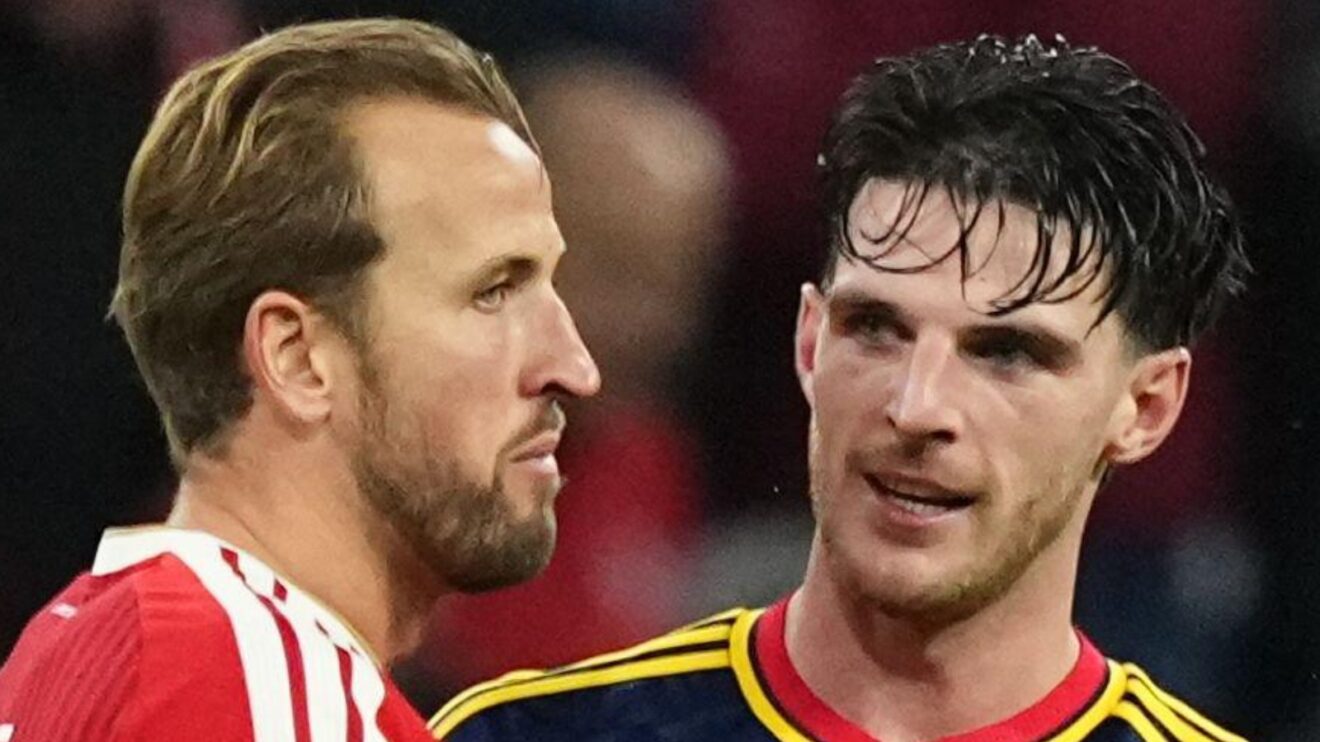
Well that certainly wasn’t boring. But if this was the beginning of the end to end for Arsenal, it didn’t always feel like a phase likely to last particularly long.
It seemed a little too open and chaotic for Mikel Arteta’s blood at times. Yet he will have ultimately derived more pride and pleasure than anyone from how Arsenal rose to the challenge at the Allianz and gave Bayern Munich almost exactly as good as they got.
Arteta put the fresh complaints over the Premier League champions’ playing style down to the volume made by “a very small minority”, adding: “We have scored so many goals, we have more possession, more shots, different players participating, no goals on set-pieces.”
And this was a continuation of that theme on an evening when the manager called for “something different”. Arsenal created two exceptional goals to lead and then equalise, had more of the ball than Bayern, were almost even on shots and four players scored or assisted.
After Paris Saint-Germain and Barcelona laid down a collective marker on Tuesday evening, the two other members of the Champions League’s Big Four showcased their best sides – and gave a snapshot of their worst.
In short, Harry Kane is a truly absurd footballer, Arsenal’s growth is still underappreciated, and both teams have weaknesses which can largely only be exploited by the sort of individual quality only a select few possess.
While there is a stench of vague meaningless to this stage of the tournament, it is belied by the competitive nature of uber-driven, standard-obsessive players in games like these. Qualification almost becomes secondary to the principal objective of making a statement against an elite equal, and extracting every trace of self-belief and conviction from that performance and result.
Arsenal’s satisfaction at earning a draw in a stadium they had lost three consecutive games in at an aggregate score of 11-2 will be tempered somewhat by their loss of control after around half an hour.
Bayern’s sense of achievement in scoring the first Champions League goal from open play Arsenal had conceded since the final game of last season’s league phase should be diluted by their inability to hold on.
They have come from behind to lead their last two Champions League games heading into the final ten minutes, only to draw both.
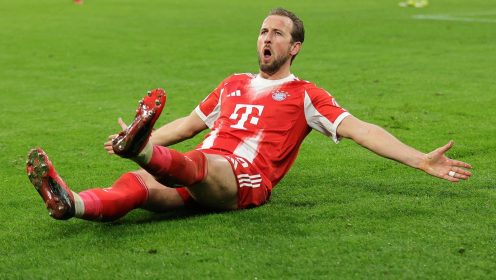
But possessing the world’s best player softens that blow. Kane was typically outstanding against his forever foe, tormenting Arsenal with an exhibition of his NFL-adjacent control of a ball.
It was his penalty, won by his shot deflecting off Jurrien Timber’s arm, which completed Bayern’s comeback on the hour. But before then the England captain’s passing highlight reel was running out of space.
One Kane goal kick – four words which admittedly read like a Euro 2016 v Iceland nightmare – initiated a three-on-two attack which David Raya thwarted with a strong hand to save from Serge Gnabry.
Another sumptuous clipped ball was calculated to clear the head of Gabriel by inches, but Ismael Saibari was not clued in on the arithmetic and could not control to shoot.
Then came the stunning, Kaka-in-the-2005-Champions-League-final-coded threaded pass from the halfway line, played impeccably into Alphonso Davies’ stride for the Canadian to finish first time.
Although Martin Odegaard provided some sublime quarterbacking of his own with a wonderful ball matched by the technical brilliance of substitute Eberechi Eze’s finish to give Arsenal a well-earned lead in the 25th minute, Kane dictated the game for a long old while.
His influence – and, to be fair, Arsenal’s brave pressing – was such that at one point in the first half, he played the ball from his own six-yard box as Bayern’s deepest player under the watch of the Gunners’ highest, Ezri Konsa.
Yet still, even with a specific shadow deployed to thwart him, Kane pulled the strings. If there are German pubs full of yer das lamenting how he is always dropping too deep and should play in the area between the width of the posts, this display likely silenced them.
Kane’s biggest problem, as has been the case for almost all of his career barring the Heung-min Son years, was that there was no Kane on the end of opportunities which would not have been created without his range and variation of passing. He did score in his tenth Champions League game, but it came from the spot.
That Arsenal steadied themselves thereafter, persisted and drew level in the remaining half an hour is testament not only to their incredible mental strength – especially after losing Bukayo Saka to an early and awkward injury – but their often overlooked skill and finesse.
Again, Arteta knew this game needed “something different” to what Arsenal tend to have to conjure in those tight, scrappy, physical Premier League clashes. Yet the team move which cut Bayern open with one-touch play between Declan Rice – was that “cheating, old man football”, Graeme? – Noni Madueke and Viktor Gyokeres was the sort they have been producing to little acclaim all season.
“That’s one of the highest levels that we’ve played,” Arteta said afterwards, as Arsenal went stride for stride with a European heavyweight and really quite tediously held their own.