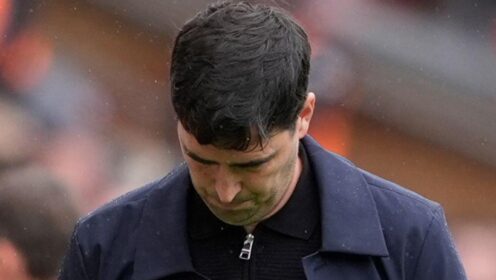
New Spurs run into Old Spurs problem that could sink big-spending De Zerbi experiment


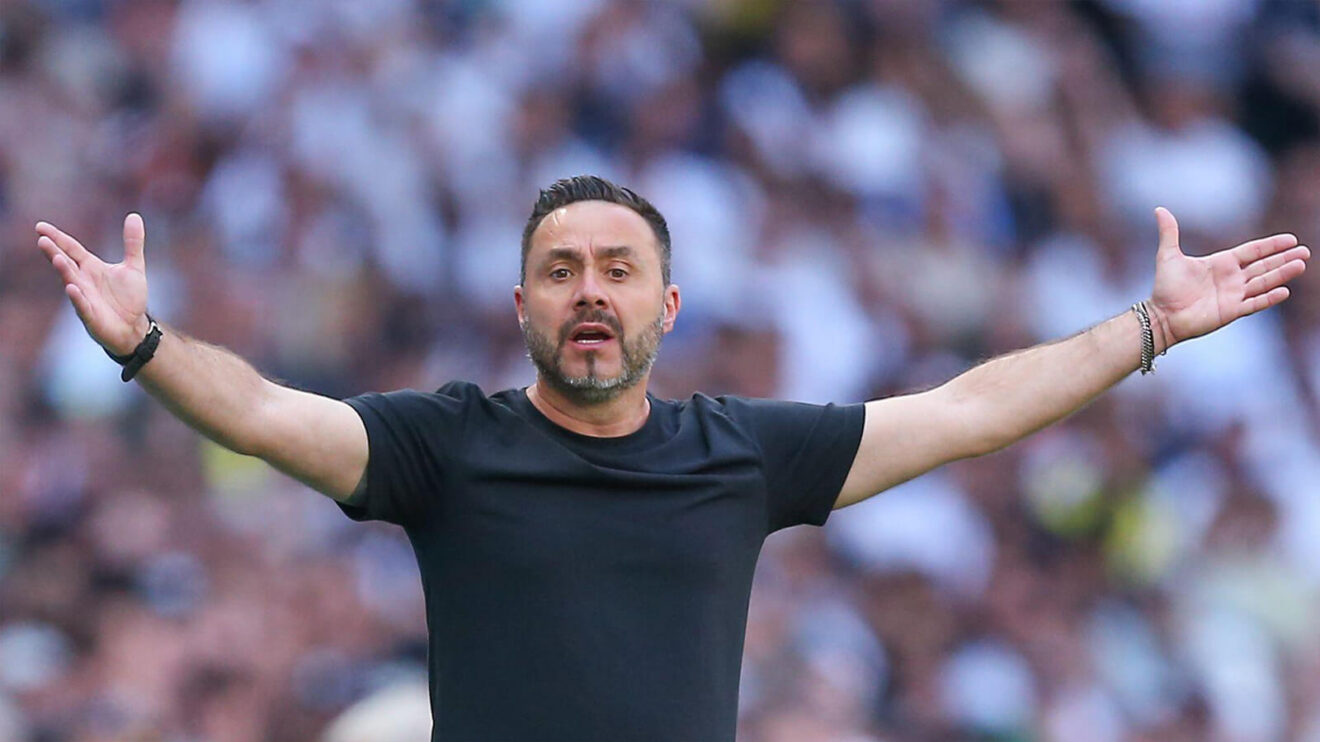
Oh, Spurs. They’re not the first club to find out that spending big money isn’t a magic solution to everything and they won’t be the last, but they are, as Spurs’ doings generally are, among the funniest.
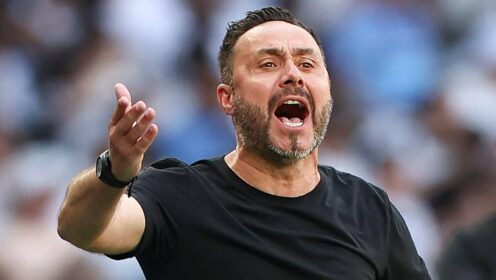
It is obviously far too early to judge Roberto De Zerbi’s 2026/27 Tottenham team, even though we are going to do a little bit of that. There still remains the very real and plausible hope that the first two games of this season are just as misleading and incomplete an evidence source as the first two games of last season, in which Thomas Frank’s side picked up six points and two clean sheets including their customary if still inexplicable win at the Etihad before proving to be actually, quite ferociously and offensively sh*t.
But it does still seem likelier that Spurs are just still, well, a little bit Spurs. And very possibly still ferociously and offensively sh*t.
We know it takes time for De Zerbi’s methods to be imprinted on a new squad – it’s why he didn’t even really attempt to do so in those desperate needs-must fraught final weeks of last season. And these are new ideas for what is also pretty much a new squad, one in which a host of familiar Premier League faces have been thrown together to see what happens.
Spurs have made eight first-team signings this summer, all of them from within the Premier League. Iliman Ndiaye may well soon be the ninth. They have compiled not so much a Premier League All-Stars team as a Premier League Quite Good, Him team.
That’s not meant to sound as facetious as it does. They’ve signed a lot of very good players who we all know can play Premier League football very well indeed. It could absolutely be enough for them to have a very good season when everything eventually comes together.
But Saturday’s defeat to Newcastle has dealt a far more serious blow to that theory than the opening-day defeat to Brentford.
The performance against Brentford was horrific all over the pitch. There was not one positive to take from any element of Tottenham’s effort that day. Which, in a roundabout way, became the positive to take from that effort.
It was just so staggeringly bad in every way that it could almost be written off. Teething troubles so extreme as to have no relevance for what might be to come. Not even Spurs could or would be this bad on any kind of consistent basis.
Newcastle was different. Spurs did indeed play much better. But the outcome was the same because while this might be a new manager with new ideas and a new squad this is still apparently old Spurs. And that’s going to be far, far harder to change than any on-field shortcoming.
Even in the (relative) good times, Spurs have carried with them a fragility. They have never ever been able to shake that label and with good reason. Even when they scored more goals and conceded fewer than everyone else in the league they finished a distant second and were largely ridiculed for it.
It doesn’t matter how good Spurs got, they were still Spurs. And now they are bad. And have been for an extended period of time.
It’s hard to quantify just how much lasting damage has been done by the last two catastrophic league seasons, but on the early evidence of this season it’s ‘a f**kton of lasting damage’.
Spurs were the better side for the first hour against Newcastle. They couldn’t be said to be playing well, or in full control of proceedings. They always appeared vulnerable to the exact goals Newcastle scored, which is its own problem. But they were creating more chances than they were giving up and were in no way disgracing themselves. They might even have had a penalty, if that were still a thing that happened in Spurs games.
Then they conceded a goal. And then everything changed. And that’s the huge problem that might bring down this whole De Zerbi experiment and why Spurs really now may be unmanageable. Because they are basically done the moment they fall behind.
The players may have changed, but the mentality has not. This is a whole club where confidence has been chipped away by years of careless rot followed by two years of alarmingly rapid decay. The mood of the whole ground changed once Newcastle took the lead.
Everyone from fans to players – on both sides – appeared to just know in their bones at that moment that there was no way back. The jig was up. This has rapidly become a self-fulfilling prophecy even for this supposedly tougher, better, new-look team.
They don’t think they can come back from a deficit, so they don’t. Other teams don’t think they’ll concede having gone ahead against Spurs, so they don’t.
Spurs didn’t win a single league game from a losing position last season – and they had several opportunities. Even in the small sample size we have from De Zerbi, we see a clear continuation of this particular trend.
In his nine Premier League games as Spurs manager, they have fallen behind four times and lost four times. In the five games where they’ve scored first, they have three wins and two draws. Spurs are still yet to even score an equalising goal under De Zerbi.
It’s an unsustainable pattern where conceding first means certain doom and scoring first offers better outcomes but no guarantees. Right now, scoring at all would be a boon.
Spurs are in the earliest stages of their latest regeneration. The new look deserves time and the chance to show what it can be.
But even if all the shiny new toys do turn out to form an appealing new whole, what can be achieved will be seriously limited if those old failings remain just below the surface.
And if the new look doesn’t click, then the more familiar elements at play could make last season look pleasant.