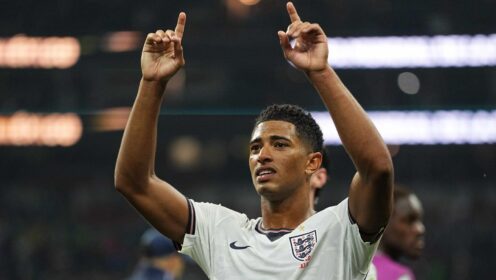
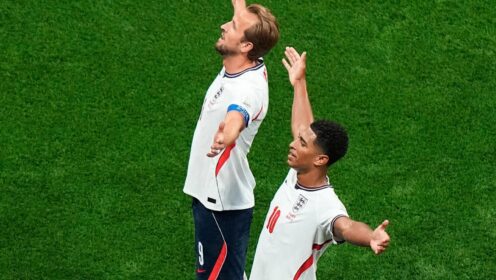
16 Conclusions from Norway 1-2 England: Bellingham, Spence, Anderson, Haaland, cables


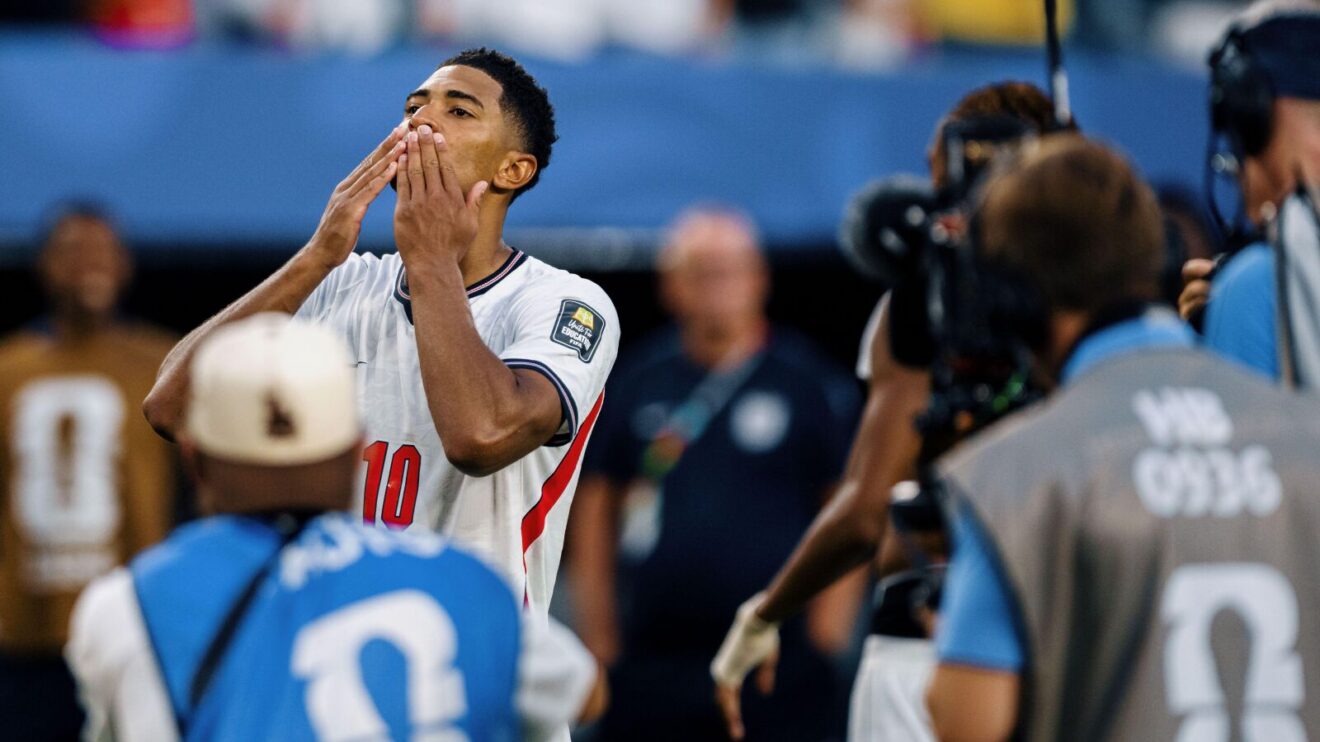
England are determined not to do it the easy way.
From the altitude sickness of the Azteca to the stifling heat of Miami, where Thomas Tuchel’s side required extra-time, some large dollops of good fortune, an Alexander Sorloth brainfade and above all large quantities of Jude Bellingham to finally see off Norway.
For just the fourth time ever, but the second in the last three tournaments, England are World Cup semi-finalists.
1. At the end of the day, after a game settled by the very finest of margins, it came down to one simple thing. England’s two superstars stepped up, and Norway’s didn’t.
Erling Haaland barely had a kick and couldn’t even drag himself out there for the final 15 minutes. Martin Odegaard never quite managed to have the lock-picking influence he’d brought to bear on previous rounds.
Yet for England? Jude Bellingham and Djed Spence were once again the best players on the pitch, in accordance with teh prophecy. This has been a World Cup for the superstars and today was no different.
We assume plastic beards with ‘25’ on them are already the must-have accessory on the school playground as Djed Fever sweeps the nation.
2. We wondered what kind of game this was going to be. We thought to ourselves that Mexico had obvious parallels with the fraught last-16 tie against Colombia from 2018. That would make this the wonderfully relaxing and stress-free quarter-final win over Sweden, wouldn’t it. Wouldn’t it? Please, guys, let this be the stress-free quarter-final win over Sweden.
It was not the stress-free quarter-final win over Sweden.
3. It does need saying early on because it caveats and mitigates absolutely everything that anyone anywhere will go on to say about this game, but the conditions were spiteful. It was incredibly hot, impossibly humid, and it coloured absolutely everything both teams did for the 120-plus minutes that followed.
There were extended spells, especially in the first half when both sides were most conscious of the need not to gas themselves out too early, where the game literally became walking football.
It also didn’t help that England’s midfield contained a visibly still unwell Declan Rice manfully trying to do his bit in just about the most unpleasant conditions imaginable to try and play football while feeling a bit peaky.
4. The first quarter of regular time appeared to have set a pattern, yet it would prove rather illusory. In that first 22 minutes, England had almost all of the ball, but with almost all of a ferociously well-organised Norway ranged in front of them, challenging them to break them down.
And with both teams knowing all the while that if England did run aground against that low block – a familiar and long-standing England failing – provided by the 4-1-4 bit of Norway’s formation, the other 1 was a loping, hulking, menacing figure whose threat even when latent is never absent.
SPOILER ALERT: That threat, though, would remain only latent throughout the entirety of the game.
We all know by now how Haaland goes about things. And this was very much a “That’s just the way I play” performance as his run of 14 consecutive competitive internationals with at least one goal came to a juddering stop at the worst possible moment.
But at some point, when what has worked for him before clearly stopped doing so here, you wonder whether he and Norway had to at least try something different? They never really did until taking the nuclear option of withdrawing him altogether for the second half of extra-time.
5. Haaland wasn’t alone, though. Harry Kane had a stinker. It happens. But it was undeniably funny that a game billed as Kane v Haaland ended up… not being that.
Kane’s big contribution was to have his pocket picked in the build up to Norway’s goal. Haaland’s was to stupidly shove Elliot Anderson to the ground before a corner from which Norway thought they’d gone 2-1 up was delivered.
They thus fell afoul of the new rule brought in before this tournament allowing for goals to be disallowed in such circumstances, a rule which had been met with extreme tabloid suspicion because Pierluigi Collina specifically used the example of an England goal when explaining what he wanted to eliminate from the game.
We assume they feel differently now.
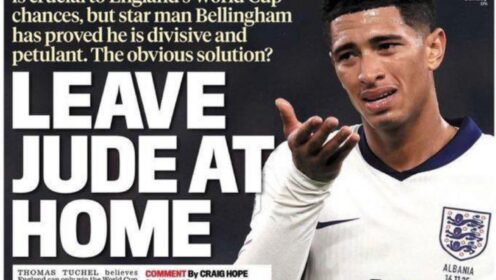
6. Of course, there’s a more conspicuous tabloid elephant in the room. The divisive soloist himself Jude Bellingham.
We’re going to go ahead now and say that Thomas Tuchel was right to pick him for this tournament, and that leaving him at home would have been a mistake that would by now have seen the rest of England’s players join him on the sun loungers.
He is now one of only three Englishmen to score six goals at a single World Cup. The other two, Harry Kane and Gary Lineker, are now the only two Englishmen with more World Cup goals overall than Bellingham’s seven. He is 23 years old.
Kylian Mbappe and Pele are the only two players to score more World Cup goals before turning 24.
He was exceptional here, again, with his two (very different) goals only the icing on the cake. His overall performance was full of quick feet and smart turns and intelligent running that, frankly, appeared at times to have been beamed in from an entirely different match.
7. But we’re getting ahead of ourselves. There was a bit of retrofitting from ITV to suggest the Hydration Break was responsible for the way this game changed. It’s understandable, but it doesn’t quite fit. It was actually about 10 minutes after the break when England decided, for some reason, to try and bait the press in the right-back corner of the pitch and play half-a-dozen passes in a row just a yard too short until they eventually lost the ball. It ran loose and just behind Haaland. It could easily have been the other side of him and the result would have felt inevitable.
A minute later Martin Odegaard played the sort of clever pass he never found again on the night to set Julian Ryerson away. His cross was met by Haaland for his one clear chance. It was too close to Pickford.
Moments later, though, Norway would have their lead. Kane lost the ball in dangerous territory, from where it was worked out to Andreas Schjelderup, who had made such an impact in the Brazil game.
It was pretty clearly a cross gone wrong that spiralled into Pickford’s net off the post, but the catalogue of England errors meant there was only so much sympathy for the misfortune.
The tone-shifting loss of control minutes earlier. Kane losing the ball. Ezri Konsa failing to close down the crosser. Pickford getting his angles all wrong and pulling his hand away from the ball as it fizzed and spun past him. All careless, avoidable errors borne of fuzzy decision-making. There was a lot of it. From both sides. We know why heads were hot, but come on.
8. The single most inexplicable piece of decision-making would follow soon after. We still can’t quite believe it happened. We still can’t quite believe Alexander Sorloth was in this position and didn’t even attempt to play the ball in for literal Erling actual Haaland.
*Haaland completely unmarked*
Sorloth: pic.twitter.com/LILtku4g4w
— Troll Football Media (@TrollFootball2) July 11, 2026
This actually is the moment people have spent eight years convincing themselves that Harry Kane-Raheem Sterling bit against Croatia was.
Sorloth is a striker by instinct and inclination, being asked to do a job on the wing, but there is simply no place in the entire conceivable, theoretical multiverse in which the option he chose was the right one here.
His shtick as a winger is to run willingly and superficially dangerously in roughly the right directions, but to end up down blind alleys and offer no end product each time. To still end up down one such blind alley in a two-v-one break where the other part of the two is the most deadly finisher on the planet has to be grudgingly acknowledged as outstanding commitment to the bit.
England fans have so much experience of this and can tell Norway fans one thing with absolute confidence: that is a moment that will stalk the nightmares of Norway supporters for years and years to come.
England were so rattled by that point it’s almost impossible to believe they could have recovered from 2-0 down. It’s even less possible to imagine Haaland wouldn’t have scored if Sorloth had just done the most obvious thing in the world.
9. Yet instead of being 2-0 Norway at the break, it was 1-1. And it was the brilliance of Bellingham that made it happen. Elliot Anderson did well, and Anthony Gordon’s pass inside for Bellingham’s run was neat and tidy. But what Bellingham did from there was outrageous. He was still one man against four defenders. Two touches later, they were all irrelevant.
And then there was the finish. It was a stunning goal, rendered all the more impressive by the significance of the moment both in terms of being just before half-time but even more so for coming at a time England were wobbling so horribly.
Thomas Tuchel said England were lucky to win tonight and he was right to say it. That shift from a likely 2-0 deficit to 1-1 in the final minutes of the half was key to the whole thing.
10. Let’s address, as we must, the first of the night’s major controversies. Did the ball hit the camera cable? We honestly don’t know. We certainly don’t see the obvious deflection that so many Anyone But England eyes detected.
We also have some sympathy with those entirely unconvinced by FIFA’s own insistence that there was nothing on snicko to suggest the ball had hit the cable. It is entirely a problem of FIFA’s own making that nobody is now inclined to listen to, accept or respect their official explanations.
What we will say is that nobody on the pitch reacts in real time as if the ball’s course has been unexpectedly diverted. Anderson brings the ball down in the way he clearly always expected to from the moment he first judged the ball’s flight. He didn’t look like a man who thought the ball was sailing over his head until suddenly it wasn’t. Nor did any Norway players.
Again, we’re not saying it didn’t hit the cable. We’re not saying you have to accept FIFA’s own explanation. But we’re also not saying it definitely did, and while it shouldn’t impact the decision on a strict liability incident, it is also worth noting that any deflection off the cable clearly didn’t meaningfully alter the ball’s trajectory.
Unless Anderson saw it was going to hit the wire and correctly deduced exactly what impact that would have. In which case listen, fair play, the man’s a genius.
11. Thomas Tuchel made two changes at half-time. He spent much of the rest of the game chasing his tail trying to correct the mess.
Bukayo Saka for Noni Madueke was straightforward and understandable. Madueke had another flatter-to-deceive of a performance in which he was often on the ball and often doing interesting things in dangerous places, but never actually delivering anything of real note.
Replacing Declan Rice was also straightforwardly correct. And necessary. Credit to Rice for even attempting to play through his illness, but it was visibly not working. He didn’t even have the energy to deliver a set-piece properly. By the end of the half he barely had the energy to trudge forlornly across the pitch to complete the formalities of hitting the first man with another attempt.
But it was here that Tuchel went rogue. He opted for Eberechi Eze as Rice’s replacement, forcing Bellingham deeper and asking even more of Anderson – who, it should be noted, proved entirely and impressively up to that challenge.
12. England lost their shape and the momentum that appeared to be theirs after equalising just before the break. Norway gradually took more control.
Norway’s second ‘goal’ was rightly disallowed, but would not have been before this tournament. And it could again be traced back to England unnecessarily piling pressure on themselves. Pickford, perhaps mindful of his first-half error, this time did tip the ball over the bar when he could clearly have left it. It set off a flurry of Norway corners that, via a save from Haaland that squirmed behind when Pickford should have gathered it cleanly, resulted finally in the corner from which the goal would come.
England were lucky Haaland was so daft – and possibly even that he forgot the new rule that could scupper him.
It was another huge moment when this game could have gone in such a different direction but for faulty Norwegian decision-making.
13. Tuchel, meanwhile, was chasing his tail trying to correct his own faulty decision-making at half-time. Someone better placed is going to have to explain why Kobbie Mainoo is getting so little game time because from the outside here it appeared obvious that he was the man both to replace Rice initially, and if not that then certainly the man to introduce here to help settle things down again.
Tuchel instead introduced Reece James into the midfield for Gordon, pushing Bellingham back forward but also Eze out to the left, where he is far less effective.
England spent an excruciating 15 minutes holding on with a centre-back at right-back, a right-back at centre-mid, and a No. 10 on the left wing.
In the very final minutes of the 90, Tuchel finally restored order. Morgan Rogers and Djed Spence came on for the two starting full-backs, and both were crucial to England finally getting over the line.
With Spence at left-back and James at right-back, things looked more secure. The balance of the midfield was still questionable, but the shape was far better. But it had taken almost the entire second half, some at times outrageous riding of luck, and several precious substitutions in extremely testing conditions to get there.
14. The benefits were found in the very first minutes of extra-time, when Rogers did what England had so rarely done before that point and just tried his luck. His shot bounced off Orjan Nyland, and an exhausted Bellingham – who had seemed unlikely to emerge for the extra half-hour given how spent he looked at full-time – somehow dragged one last effort from deep within to gamble on such a rebound coming his way. He got there before the defender, and England got the lead they would protect until the final whistle.
15. Still there was time for more drama. England thought they had a penalty minutes later as precisely the sort of run that only Thomas Tuchel has previously believed Spence to be capable of took him careening into the Norway box, where he stepped across the defender to shield the ball and draw contact that duly came.
It is a penalty that would have been awarded and not complained about at all in the pre-VAR world. Even with VAR, there is, we think, no other time before this tournament where there would have been much thought to overturn it. Yes, the attacker had been pretty clever to ‘buy’ the foul, but a clear and obvious error it would not be, and Harry Kane would be once again stepping up to attempt his favourite thing.
Yet at this tournament, from the first replay, we knew it would be overturned. Which is fine. There has been consistency on this at least. This was certainly less of a penalty than the absolute stick-on spot-kick Kylian Mbappe was denied all the way back in the mists of week one when he was adjudged to have initiated contact in an incident that everyone watching just knew instinctively and instantly to be a penalty based on everything they’d ever seen from however many years of watching this game.
It set a new standard, and one that has been followed. These are no longer penalties and what is more we now know that their award is considered clear and obvious enough to be overturned. We await with interest to see how leagues around the world choose to interpret this apparent shift.
16. It was just the most eye-catching of another superb appearance off the bench for Spence, though. Rogers made his mark. Eze and Saka grew into the game too as, after a very shaky start, England’s subs did ultimately prove significant difference-makers in conditions when they would always have to be.
And it all ended as England games now apparently must: with Big Dan Burn stepping off the bench to put his head on absolutely everything that enters its orbit.
We don’t hate it all. He and Jude and the rest will go through it all again on Wednesday night as England, for only the third time since 1966, try and take that final step into the World Cup final.