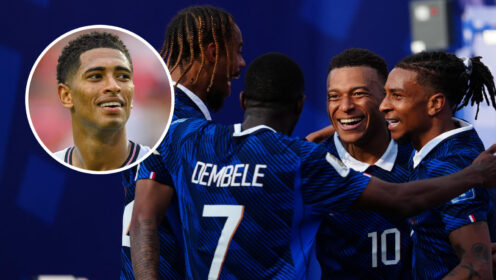
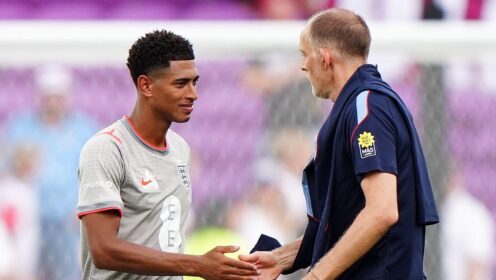
Thomas Tuchel f***s it as Argentina smash England’s bus to end World Cup dream


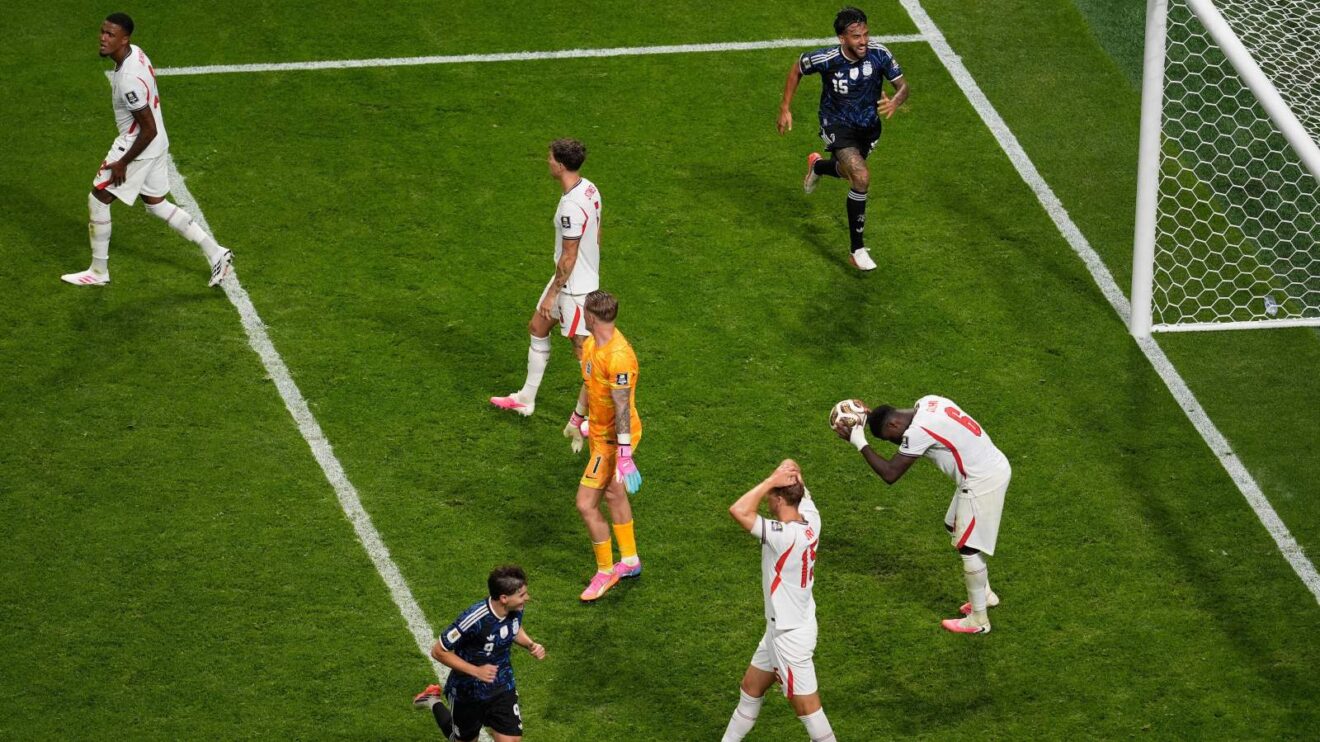
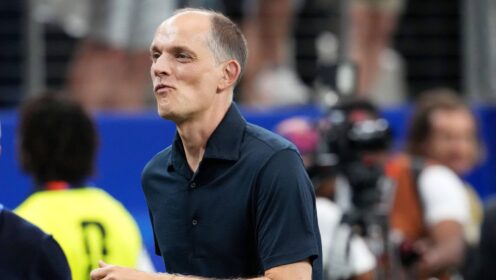
England have fallen at the 2026 World Cup semi-final hurdle after Thomas Tuchel went too far, too early with the defensive gameplan that had served him so well.
It was one hell of a scrap between old rivals Argentina and England, with the reigning world champions setting the tone immediately.
The first foul of the match was a sign of things to come as Leandro Paredes left one on Jude Bellingham, giving him a shove off the ball in the most blatant example of ‘letting him know you’re there’.
Argentina’s gameplan was obvious from the outset. Paredes’ foul was quickly followed by what BBC commentary described as an “assault” on Elliot Anderson, who was fouled three times in the opening 10 minutes yet somehow became the first player booked.
One of those fouls saw Enzo Fernandez smash into the back of Anderson’s neck and somehow avoid a yellow card, though the England midfielder got his own back moments later by deciding to start a wrestling match with the Chelsea man.
The fuse was incredibly short as melees broke out throughout the first half, with Anderson almost always at the centre of them as the only England player who came close to being dragged down to Argentina’s level of physicality and s**thousery.
His booking felt particularly harsh. Djed Spence looked to foul Lionel Messi – and you simply cannot breathe near Messi, never mind foul him, without his teammates sprinting over to go crazy at the referee.
Anderson was probably punished more for Argentina’s reaction than his own actions after Messi wriggled through like he was in his prime before a combination of Manchester City’s new £115million man and Spence brought him down. Cue the world champions surrounding Messi’s ‘favourite referee’, Ismail Elfath.
The Argentine reactions and gamesmanship were shameful at times but hardly surprising.
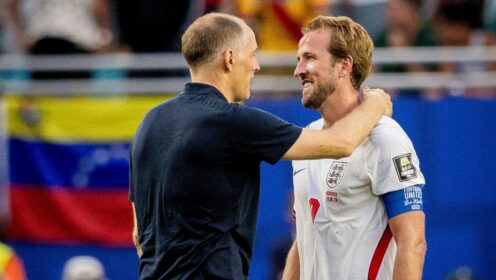
There was Leandro Paredes’ pathetic attempt to get Harry Kane sent off after the England captain barely covered his mouth while speaking to the American referee, while surprise starter Giuliano Simeone somehow escaped a yellow card despite committing five first-half fouls and theatrically throwing himself to the floor when Jordan Pickford gave him the gentlest of nudges.
Rhythm – or rather the complete lack of it – was an immediate talking point among BBC pundits Wayne Rooney, Joe Hart and Micah Richards at half-time, and the stop-start nature of the contest suggested Argentina’s gameplan was working better than England’s.
That was largely because Argentina’s approach was far easier to execute. If one side wants to ensure there is no rhythm, they can achieve it through constant fouls and breaking up play, seemingly without any fear of persistent infringement bookings, which do not appear to exist at this World Cup. A team trying to play quickly is largely helpless against opponents with Argentina’s mentality.
It was all-out war as football became almost an afterthought on the pitch, just as it had on social media before kick-off. There was barely anything to note in a first half that failed to produce a single shot in its opening 30 minutes – the first time on record that has happened in a World Cup match.
Eventually, a game of football threatened to break out as both sides appeared content to reach half-time goalless.
But it was England who struck first – and in a manner that emphatically vindicated one of Tuchel’s biggest selection calls.
The German, who entered the tournament knowing no foreign manager has ever won the World Cup, has made a series of bold decisions throughout the competition and almost every one has been justified.
Morgan Rogers starting on the right wing was another eyebrow-raising choice. Tuchel had alternated between Bukayo Saka and Noni Madueke throughout the tournament, while Madueke’s inclusion in the squad over players like Cole Palmer reflected the manager’s desire for a club-like environment with specialists in every position rather than shoehorning talent into the team.
Rogers’ first start of the tournament came in a World Cup semi-final against England’s biggest rivals, but Tuchel looked vindicated when the Aston Villa forward delivered an inch-perfect cross for Anthony Gordon to convert at the back post.
Both wingers combined brilliantly, with the move beginning from one of Harry Kane’s trademark deep diagonal passes – the kind of tactic that so often frustrates England supporters until it works.
Another major call was starting Spence at left-back, with Reece James also returning as Ezri Konsa and Nico O’Reilly dropped out.
Spence had been outstanding off the bench against Norway in the quarter-finals, so his inclusion was hardly a shock, though O’Reilly had done little to deserve losing his place.
Shortly after Gordon’s opener, Spence produced an outstanding last-man tackle on Simeone to further cement himself as England’s best player on the pitch.
He was exceptional both in and out of possession, showing the same fearless confidence that transformed England’s quarter-final and winning duels he had absolutely no right to win.
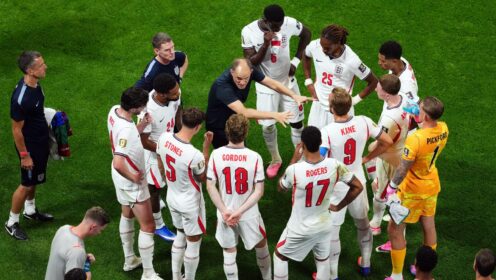
With England ahead, Tuchel immediately instructed his side to protect the lead.
It was undeniably Gareth Southgate-esque, but because it was Tuchel – whose every major decision had paid off to this point – it somehow felt justified. Until it clearly wasn’t.
Jordan Pickford was quickly called into action, producing a colossal save to deny Nico Gonzalez’s header before the second-half hydration break, after which Konsa replaced goalscorer Gordon while Lionel Scaloni responded with a triple substitution.
It became very, very, very nervy.
Alexis Mac Allister headed against the post before forcing another superb Pickford save with yet another header.
Scaloni’s next move was introducing eventual match-winner Lautaro Martinez, while Tuchel responded by replacing the crocked James (shock) with O’Reilly before sending on Big Dan Burn for Declan Rice.
It was a proper rearguard action. Which was working until the 85th minute.
England were content to allow Fernandez to keep shooting from 25 yards until one finally found its way past Pickford with only five minutes remaining.
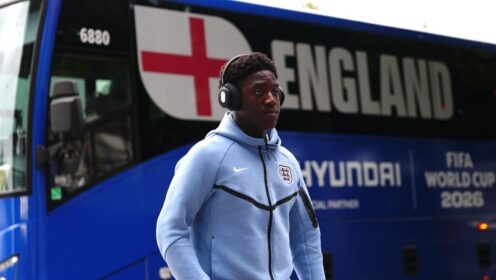
Unlike against Mexico at the Azteca in the last 16, England’s bus had finally been breached. Suddenly Tuchel had too many defenders on the pitch and not enough footballers capable of changing the momentum.
This was the first major call he had got wrong all tournament, though most managers would happily accept their opponents’ biggest threat being speculative efforts from distance.
Unfortunately for England, one finally flew in.
The score was level, the atmosphere had completely changed and the momentum now belonged entirely to Argentina.
Yet the pattern of the match remained the same: attack versus defence.
Mac Allister struck the opposite post early in stoppage time before substitute Lautaro Martinez nodded into an gaping net from a delicious Messi cross.
Just like that, Tuchel had gone from looking untouchable to throwing away a place in the World Cup final.
England went from disciplined rearguard action to kitchen-sink desperation in the blink of an eye but never found a response, leaving their World Cup semi-final exit to be defined by Tuchel’s in-game management.
His decision to park the bus backfired. Not immediately. It took half an hour after Gordon’s goal. But it backfired all the same, and England are out.
Guy Mowbray and Alan Shearer both agreed it was the first gamble Tuchel had lost all tournament. He simply went too far, too early.
The defensive changes that had brought England this far ultimately became their downfall against a side they are arguably better than on paper.
But Argentina have Lionel Messi, who was allowed to run the game after England’s defensive changes. And they have a squad full of teammates who look willing to die for him.
They always seem to find a way. England are simply the latest team to discover that – in the cruellest possible fashion.
It’s not coming home. Sorry, folks.