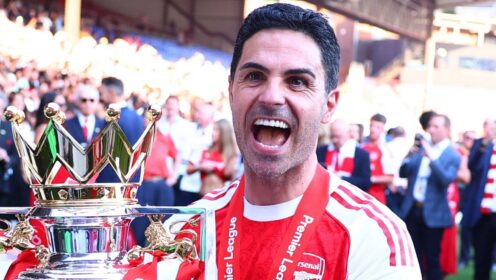
Lineker, Lampard and Le Tissier link up in England L-Team


England top Group L at the World Cup but would Lineker, Lampard and Le Tissier inspire the L-Team to alphabet-based victory?
It ends with Gary Lineker but it starts with…
Goalkeeper: Harry Linacre
Long-serving Nottingham Forest number one Harry Linacre is currently unopposed for the starting spot in the net, with his two caps in 1905 making him the only goalkeeper eligible for the L-Team. Joe Lewis came close in 2008, getting a shock call-up from Fabio Capello after K-Team star Chris Kirkland dropped out of the original squad, but the Peterborough player remained on the bench.
If you fancy a goalkeeper challenge, try naming the keeper who won a league title with Arsenal and played for the England B side in 1990 but ended his career uncapped.
Right-back: Chris Lawler
A firm fixture in Bill Shankly’s Liverpool side, Chris Lawler spent 15 years at the club, winning three First Division titles. For England, he was on stand-by in 1966, as third-choice right-back behind Jimmy Armfield and George Cohen, leaving him waiting until his late 20s before receiving his first cap.
Lawler’s starting spot is under threat from Tino Livramento and Ephraim Longworth, another former Anfield number two, who picked up five caps in the 1920s.
Centre-back: Brian Labone
From the red side of Merseyside to the blue, legendary Everton captain Brian Labone starts at the back with Lawler. A one-club man, Labone was a strong yet mobile centre-half and his excellent anticipation and timing in the tackle saw him booked only twice in his career. For England, he famously missed the chance of becoming a World Cup winner in ’66 by opting to please the future Mrs. Labone and not reschedule their upcoming marriage, but he did line up alongside Bobby Moore four years later in Mexico, where he won the last of his 26 caps.
Centre-back: Joleon Lescott
Joleon Lescott joins Labone to make an Everton alumni centre-back partnership. Lescott won his first seven England caps while on the books at Goodison Park, before moving on to newly-minted Manchester City in 2009. He was part of Roy Hodgson’s Euro 2012 squad and scored in the Three Lions’ opening match against France. Nottingham Forest’s double European Cup winner Larry Lloyd will have to settle for a spot on the bench.
Left-back: Graeme Le Saux
Injury prevented Graeme Le Saux from competing at the Euros in 1996 and 2000, while England’s failure to qualify the last time the World Cup went stateside resulted in his only major tournament being France ’98. He did, however, play in the prestigious Umbro Cup in ’95, where he scored his one and only international goal; if you’ve never seen it, it justifies his spot in this team alone.
There are plenty willing to take Le Saux’s number three shirt, though, including Arsenal’s young star Myles Lewis-Skelly, as well as ’70s Liverpool left-back Alec Lindsay, Fulham legend Jim Langley and Frank Lampard Sr.
Midfield: Frank Lampard
While his dad doesn’t make the cut, Frank Lampard Jr certainly does. One of only ten England centenarians, Lampard currently sits at joint-eighth, alongside Sir Bobby Charlton, on the all-time appearance list. The Chelsea legend is part of an attack-minded L-Team midfield but there are some reinforcements on the bench if things need tightening up. The Lees of Sammy and Rob have 35 caps between them and Jesse Lingard, England’s number seven when the Three Lions got knocked out by Croatia in the semis of 2018, is another option. Former Tottenham team-mates Aaron Lennon and Jake Livermore, as well as Ruben Loftus-Cheek, also wait in reserve.
Midfield: Matt Le Tissier
The goals this midfield could score… makes you think. While Matt Le Tissier is concerned about chem trails these days, he was a trailblazer back in the early Premier League years, showing young English talent that the fancy flicks and flair didn’t just come from foreign talents like Bergkamp and Cantona. Le Tissier only made eight appearances for the Three Lions, with suggestions that a lack of work-rate and stamina, as well as his laudable loyalty to lowly Southampton, cost him the chance of earning the number of caps his talent deserved. Another former Saints star, Adam Lallana, will have to settle for a spot on the bench.
Midfield: Francis Lee
Predominantly a forward, Francis Lee was occasionally deployed in midfield and that’s where he’ll have to play in this XI. One of Manchester City’s greatest pre-Sheikh era players, he lifted the First Division title in 1968 and went on the score the penalty which gave the Citizens their maiden European trophy, the now defunct Cup Winners’ Cup. Lee became a regular in Alf Ramsey’s side after making his international debut shortly after City’s triumph in the league and was one of the key players looking to defend the World Cup at Mexico ’70. The agonising 3-2 defeat to West Germany in the quarters after the Three Lions had gone two up proved to be his last action in a major tournament for his country and he won his final cap on his 28th birthday.
Striker: Tommy Lawton
The L-Team may just have the strongest forward line of the all the alphabet sides. Tommy Lawton bagged 22 goals in 23 games for his country and if wasn’t for the Second World War Harry Kane could well be still chasing down the record for all-time England goalscorer.
Powerful yet nimble and imperious in air, Lawton was arguably the greatest centre-forward on the planet in the 40s, just without a World Cup to prove it. Come the 1950 tournament in Brazil, his international career had ended after he made the shock decision to drop into the lower leagues, opting to win the Third Division South with Notts County over running riot in Rio.
Striker: Nat Lofthouse
Nat Lofthouse joins fellow Bolton-born striker Lawton in the XI. Lofthouse signed for his hometown club the day after World War Two broke out and honed his skills in the wartime regional leagues to become an instant hero when he made his professional bow, bagging over 20 goals in his maiden season. Formidable in the air and possessing a powerful strike, the Trotters hitman won his first cap in 1950 and hit the ground running for the Three Lions too, scoring twice on his debut. Three years later he became the ‘Lion of Vienna’ after a gallant performance against Austria that saw him score another brace in a famous win before finding the net three times at the World Cup in Switzerland in ’54, as England suffered quarter-final heartbreak against holders Uruguay.
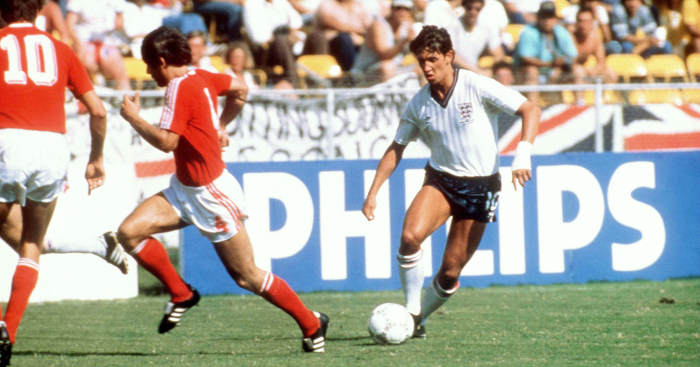
Striker: Gary Lineker
This XI certainly has the chance of scoring some worldies with Lofthouse, Lawton, Le Saux, Lampard and Le Tissier in the mix, but there’s no man better at putting the all-important goals away than Gary Lineker. The Golden Boot winner at World Cup ’86, Lineker’s strikes got England out of trouble in the big games, with his two penalties in the quarter-final against Cameroon four year later sending the Three Lions through to that one night in Turin. Given the strength of the striker department, there won’t be much of a look in for any other forwards eligible for the L-Team, but Everton legend Bob Latchford is a solid option on the bench.