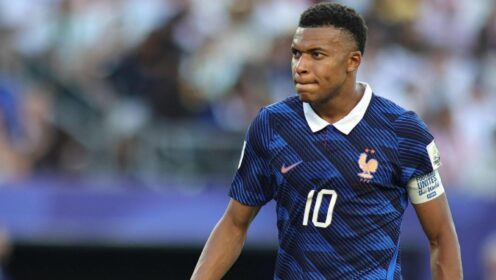
Real Madrid’s shameless Kylian Mbappe Ballon d’Or push is laughable


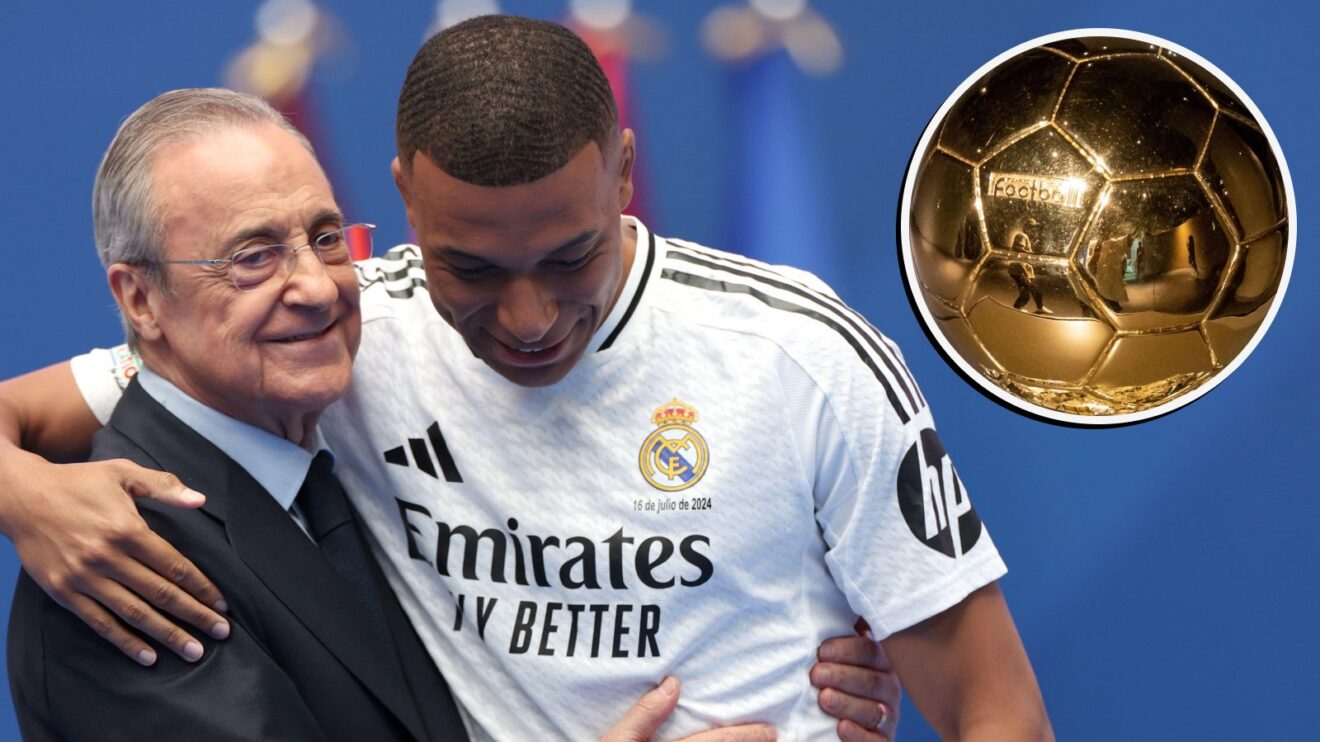
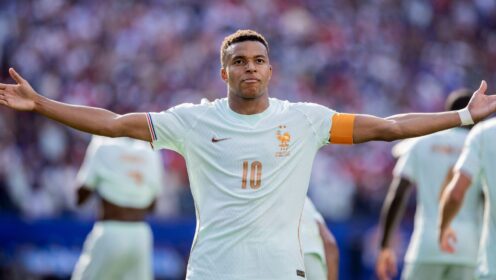
There is nothing subtle about Florentino Perez’s campaign to secure Kylian Mbappe the Ballon d’Or.
The Real Madrid president’s increasingly shameless lobbying recalls the club’s desperate late pursuit of Marc Cucurella before the World Cup, when having a Spain international on their books suddenly became a matter of institutional importance.
Ignore the fact that Real Madrid went trophyless last season, the case for Mbappe ultimately rests on a fairly simple premise: that the Ballon d’Or should recognise the best player in the world, rather than merely the player who won the most.
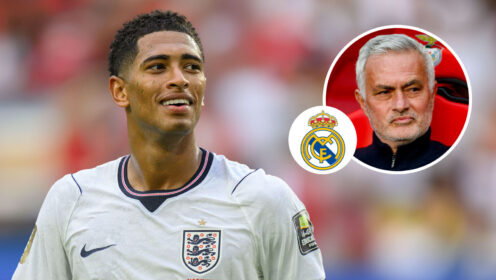
“For me, there is one who, individually, made history this summer,” Jose Mourinho told reporters last month.
“You cannot give the Ballon d’Or to a player simply because he won the Champions League or the World Cup.
“The Ballon d’Or should go to one of those players who, when they retire, will be missed forever. Maradona, Ronaldinho, Ronaldo Nazario, Cristiano Ronaldo, Messi, Zidane…
“If we want to reward the Champions League, then give it to Luis Enrique. For the Spanish national team, give it to [Luis] De la Fuente. The best player in the world is something else and he is neither at PSG nor in the Spain team.”
Mourinho is a superb political operator. No wonder Perez loves him. He understands the institution, knows how to work the room and, above all, is a proper company man.
And he makes a convincing argument. Perhaps it should be as simple as a recognition of the best player on the planet. That certainly used to be the case, before the award got tangled up in relentless politicking. Florentino Perez, of course, has never been one for that sort of thing. Ahem.
From 1992 to 2006, not once did the Ballon d’Or go to a player who won the Champions League. In 1994, 2010, 2014 and 2018, it didn’t go to a World Cup winner. Mourinho is right: it shouldn’t simply default to whoever lifted the biggest trophies.
When you consider the full eligibility period, it’s hard to argue that any one player from Spain or PSG did quite enough to deserve it.
But Mourinho’s words are effectively redundant. Rodri and Lamine Yamal are outsiders; Khvicha Kvaratskhelia and Ousmane Dembele are massive long shots.
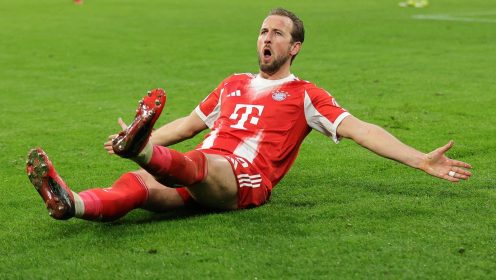
Harry Kane won neither the World Cup nor the Champions League, but he’s the overwhelming favourite for a good reason. He won the European Golden Shoe, comprehensively outscored Real Madrid’s No.10, fired his team to a domestic double and went further in the biggest competitions directly at Mbappe’s expense.
Mourinho was talking about his player, of course. But read those words again and try to ignore how perfectly they apply to Kane.
Despite that, Mbappe himself has enthusiastically joined the bandwagon.
“I think when you play for Real Madrid, the best club in the world, people associate you with this award,” he said.
“There are many people that speak about me and the Ballon d’Or. Of course I’ve made history in the most important competition. Maybe it’s a good year for this but people can vote according to what they think.”
Made history? You finished fourth, mate.
Rodri captained Spain to the trophy and took home the Golden Ball award for the best player.
A 39-year-old Lionel Messi had a strong case to have won the award for a third time after leading an otherwise painfully limited Argentina to within a whisker of winning it after a Maradona ’86-esque individual tournament.
Without being facetious, Mbappe – of course – had a great World Cup. He was France’s standout player, and Les Bleus were exhilarating in their run to the semi-finals.
But he was ultimately shut out when it mattered by a superb Spain team. And it’s in those margins that the award is ultimately decided.
It was a similar story in the Champions League, when Mbappe scored home and away in Madrid’s quarter-final defeat to Bayern Munich. Kane also scored in each leg and was on the winning team.
Mbappe did take home the Golden Boot for the top scorer at the World Cup, but the difference between himself and Messi was the brace he scored in the glorified friendly defeat to England in the third-fourth place play-off.
Take that away, and he notched one more goal at the tournament than Erling Haaland; we don’t hear anyone campaigning for that candidacy.
Indeed, Mbappe did “make history” by becoming the World Cup’s all-time top goalscorer. But that achievement stands on its own terms. It is a remarkable milestone in the wider context of his career, but the Ballon d’Or is about individual performance over a defined period, not a player’s cumulative place in history.
Remember when Miroslav Klose won the Ballon d’Or after topping the World Cup’s all-time goalscoring charts in 2014? Us neither. (Reader, he wasn’t even on the 23-man shortlist).
There is a precedent for this sort of thing in football – Ryan Giggs’ laughable 2009 PFA Player of the Year win, essentially football’s version of Martin Scorsese finally getting the Best Director Oscar for The Departed. But we can’t find any such quasi lifetime achievement award example in Ballon d’Or history.
“I always think I’m the best [player in the world] but everyone has their own opinion,” Mbappe continued.
“Maybe people think different ways. I don’t think it’s a discussion we need to have. Of course this year could be good for me to win the Ballon d’Or. But journalists vote.”
You can tell that Mbappe’s biggest footballing idol is Cristiano Ronaldo, can’t you?
His unwavering belief that he’s the greatest footballer on the planet is, in its own way, admirable; you suspect that level of self-confidence is part of what makes him such a devastating goalscorer. And believing Mbappe is the best player in the world isn’t exactly an outrageous take.
Mbappe’s time will surely come. But herein lies the issue of an individual award in a collective context. And given how Mbappe scoffed when a journalist questioned his lack of pressing, you sense that the penny still hasn’t quite dropped.
Nobody with a straight face would argue that Ousmane Dembele is a better footballer than Kylian Mbappe. Yet there he is, with a Ballon d’Or to his name, having presumably heeded Luis Enrique’s advice.
“Michael Jordan would grab his team-mates by the balls and defend like a madman,” the PSG manager told Mbappe directly in a now-infamous clip from a 2024 Movistar documentary.
“You have to set that example first as a person and as a player.”
There is no argument to be made against Mbappe’s individual production. His numbers speak for themselves. But the Ballon d’Or is not simply a prize for the most spectacular output.
Mbappe was the face of a superstar PSG side that repeatedly failed to deliver in Europe. Since his departure, they’ve won consecutive Champions Leagues. Since he arrived at the reigning European champions, Los Blancos have endured a near-unprecedented two-year wait for a major trophy.
Being the best player isn’t enough. At some point, the best player has to make his team better, too. Look at every winner for the past 20-odd years. Kaka, Messi, Ronaldo, Modric, Benzema, Rodri and Dembele.
Until Mbappe can demonstrate that, talk of him winning the Ballon d’Or deserves to be laughed out of the room.