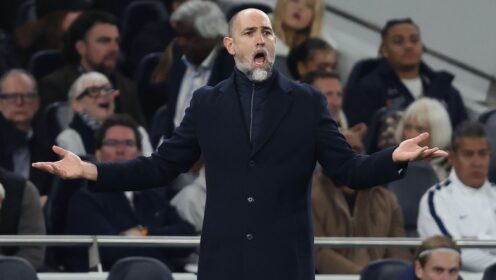
Igor Tudor is officially ‘the worst manager in Premier League history’ despite Mourinho blast


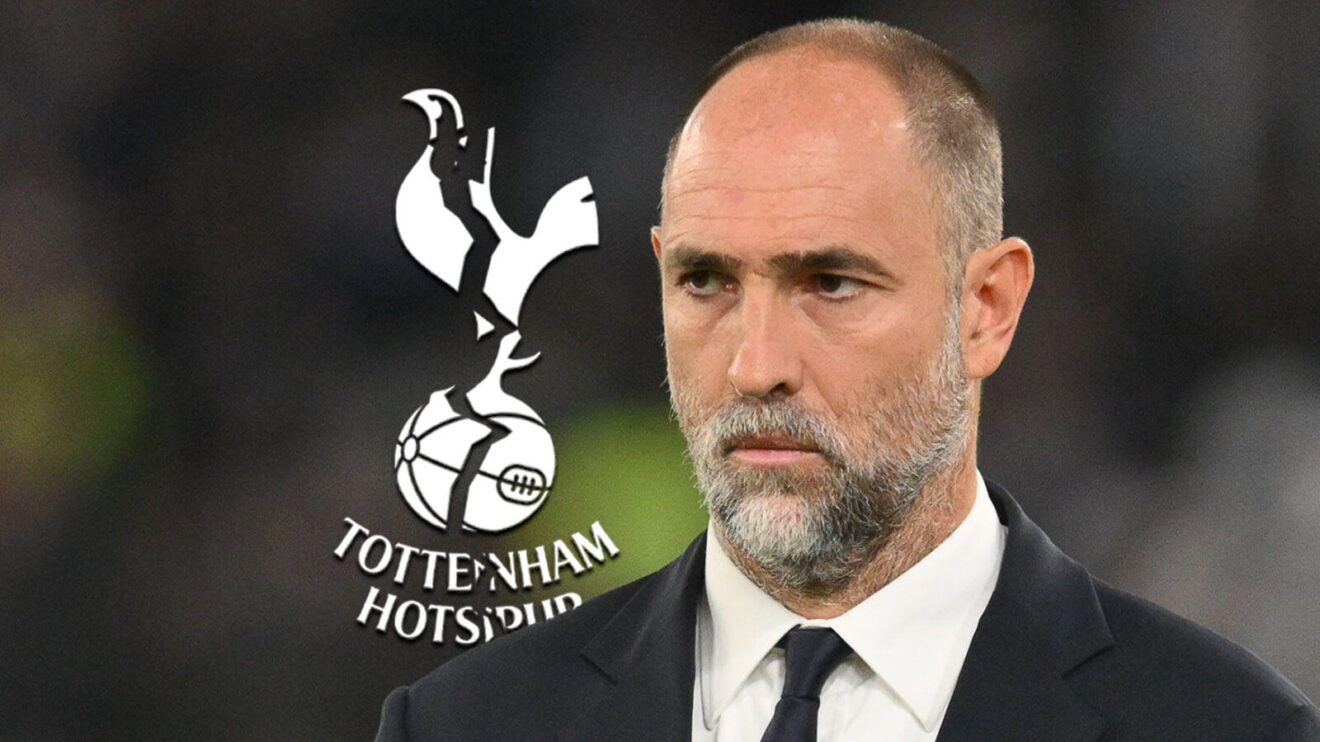
Igor Tudor is legitimately the worst manager in Premier League history. Even Terry Connor got a few draws and never tanked a player’s career.
The Tudor reign at Spurs went from worse to good lord man, what the shuddering Christ are you doing in a really quite baffling Champions League defeat to Atletico Madrid.
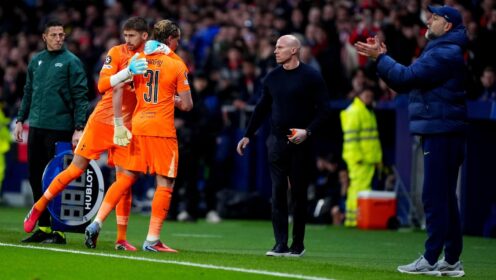
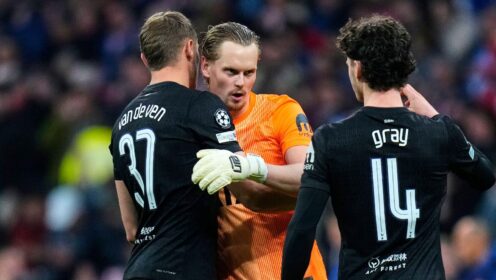
Antonin Kinsky became collateral damage as Tudor took 17 minutes to remove the keeper he had brought in from the cold, with the ‘fraud’ having overseen the worst start of any Spurs manager ever.
Tudor’s four games in charge have resulted in as many defeats, 14 goals conceded and just five scored, making him really quite possibly the worst manager in Premier League history.
The seven listed below are the only other coaches with as many as Tudor’s three Premier League games without a win as a manager – but each of them have a viable argument to be declared better than the Croatian.
Terry Connor
When Mick McCarthy shoved the Wolves job up his own arse/b*llocks in February 2019, chief executive Jez Moxey described the role as “not for a novice”.
In 2026, it remains the only club post of Connor’s senior coaching career, and we don’t imagine the current Walsall assistant looks back on it too fondly.
Connor has since followed McCarthy to Ipswich, the Republic of Ireland, APOEL Nicosia, Cardiff and Blackpool, each time having to listen to his Barnsley-born brethren tell him that it very much can get worse.
It certainly did under Connor at Wolves. His 13 games in charge all came in the Premier League and featured nine defeats and the concession of a Pavel Pogrebnyak hat-trick in a 5-0 reverse at Fulham.
But Connor also earned four draws, opening his reign by holding Newcastle at St James’ Park before battling to goalless stalemates with Sunderland and Everton, and a mildly absurd 4-4 at Swansea from 3-0 down.
He never even substituted his keeper, kindly deciding not to torpedo the lamentably ignorant Wayne Hennessey‘s career.
Simon Rusk
There were no discernible pieces to pick up from the incomprehensible mess Russell Martin and Ivan Juric left behind at Southampton in 2024/25, but Rusk was basically given a singular remit: just break the Derby points barrier.
He had eight games to do it – one in December and the rest from April onwards – and managed to nudge over the line with a draw against a typically magnanimous Manchester City.
Ruben Dias gave Rodri a day off from being the biggest cryarse in the Premier League at a clearly inferior opponent choosing not to roll over, but Pep Guardiola disagreed and said “we have to accept it”.
“We did not concede one shot on target and they didn’t do much but we have to accept the way they play,” he added. “It belongs to Simon and his assistant coaches.”
Nathan Redmond was thankfully not associated with Southampton by that point or Guardiola might have burned St Mary’s down to the ground.
Neil Adams
Norwich chief executive David McNally felt they “were left with no choice” but to sack Chris Hughton in April 2014, with the Canaries hovering above the Premier League coal mine in 17th, five points clear of the relegation zone.
“Am I confident I can get the results to keep us in this division? Absolutely,” said an entirely unconvincing Neil Adams, perhaps not realising that asking and then immediately answering your own rhetorical question in a performative show of confidence actually has the opposite effect.
One point from five games was not quite enough, even if it did come in a valiant effort as part of one of the more underrated title bottle-jobs in Premier League history as Chelsea hid their shortcomings behind a horizontal, Steven Gerrard-shaped distraction.
Sunderland basically did Norwich over by winning four and drawing one of their last six games under Gus Poyet during their perennial appoint firefighter, sack firefighter, appoint firefighter, sack firefighter survival cycle.
But still, Adams did get a draw. And only lost 2-0 at home to Arsenal – even if conceding to Carl Jenkinson will forever remain his shameful last act as a Premier League manager.
Frank de Boer
A particular bitter Jose Mourinho branded De Boer “the worst manager in Premier League history”. It remains difficult to put together a cogent counter-argument, so credit to Tudor for trying.
De Boer was once the sore thumb on a Palace manager succession line that could have doubled up as a talkSPORT guest list before Oliver Glasner’s appointment: Ian Holloway, Keith Millen, Tony Pulis, Keith Millen, Neil Warnock, Keith Millen, Alan Pardew, Sam Allardyce, De Boer, Roy Hodgson, Patrick Vieira, Paddy McCarthy, Roy Hodgson, Paddy McCarthy.
Hodgson can spend one of his slots in an ill-fitting Ange Postecoglou mask while winding up Jamie O’Hara for some variety.
De Boer was the gamble that did not pay off and was given no time to right any wrongs. It was quickly decided that persisting with a manager who kept showing up players in training by ‘picking balls out of the sky, swivelling on the spot and then pinging one into the top corner’ was not worth it.
The Dutchman’s name belongs in infamy after four Premier League games, all of which ended in defeat without scoring. But even then he at least won a bloody match in the League Cup, somehow overcoming the second-round might of McCarthy and Connor’s Ipswich.
Graeme Jones
In his three games in interim charge as a bridge between the Steve Bruce error and Eddie Howe era, Jones saw Newcastle enjoy an average of 26.6% possession against Crystal Palace, Chelsea and Brighton.
And it was more than good enough for a pair of stabilising draws before the Saudi money properly started to roll in.
A Callum Wilson overhead kick pegged Crystal Palace back at Selhurst Park, before Isaac Hayden scored what might forever be his final Premier League goal to earn a point at Brighton and bring Newcastle off the bottom of the table.
Jones is still at St James’ Park, humouring Jason Tindall every time he makes a slightly inappropriate joke about what you can’t say nowadays.
Michael Skubala
It was a label which followed Ole Gunnar Solskjaer around mercilessly during his time at Manchester United, but something in which Skubala should take immense pride as an actual P.E teacher who became a Premier League manager.
Skubala served at Lutterworth College slightly longer than in the big chair at Leeds, with two of his three games steering a ship that had been sinking under Jesse Marsch coming home and away against Manchester United.
Leeds scrapped for a point at Old Trafford but lost the return fixture at Elland Road, then were Dycheballed at Goodison Park before Javi Gracia – and still absurdly hilariously – Allardyce was called in.
Skubala ranked about mid-table of the 40 Premier League managers that season.
Hayden Mullins
There will likely never be a later mid-season Premier League sacking than the fate which befell Nigel Pearson in July 2020.
It is not difficult to envisage how he might have rubbed the Watford hierarchy up the wrong way, but it was a bit weird to put the entirely untested Mullins in charge for the club’s crucial final two games against Manchester City and Arsenal.
The Hornets lost both matches and ultimately their Premier League place. Yet even still, Mullins delivered a goalless draw with Crystal Palace in his previous caretaker stint before the Pearson appointment, so has more points and clean sheets than Tudor from as many games.